Check your shelf: odds are niacinamide is already in at least three of your products, whether you sought it out or not. It’s in Korean toners, serums, sunscreens, and moisturizers — quietly one of the most-used ingredients in all of skincare.
That ubiquity is exactly why it deserves a proper explainer. Niacinamide’s skincare benefits are real, but they’re also the most exaggerated on the internet — promised as a cure for everything from acne to aging by people selling both. This is the hype-free version: what niacinamide is, what it may genuinely help with, what it won’t do, and how K-beauty formulates it differently.
What is niacinamide?
Niacinamide is a form of vitamin B3 — a small, water-soluble molecule that’s been studied in skincare for decades, which makes it something of a rarity: a trendy ingredient with an actual long-term track record. It’s stable (doesn’t break down in light or air like vitamin C), famously well-tolerated, and compatible with nearly every other ingredient in your routine. That combination — effective enough, gentle, plays well with others — is why formulators put it in everything.
What niacinamide may actually do
Here’s the honest benefit list, in cautious language on purpose — skincare works gradually and results vary from person to person:
- Support the skin barrier. Niacinamide is used to help skin maintain its protective outer layer, which in practice means skin that may feel less tight, less reactive, and better at holding onto moisture.
- Help skin look more even-toned over time. This is niacinamide’s marquee use in K-beauty “tone-up” and brightening-style products — supporting a more uniform, luminous look with consistent use over weeks.
- Help visibly regulate the look of oil. Many people with oily or combination skin find their skin looks less shiny and pores appear less prominent with regular use.
- Comfort skin alongside actives. Because it’s so gentle, niacinamide is often paired with stronger ingredients (like exfoliating acids or retinoids) to keep a routine feeling comfortable.
Notice what those have in common: support, help, appear, over time. That’s not us being lawyerly — it’s how cosmetic ingredients genuinely work. Anyone promising more is overselling.
What niacinamide won’t do
The credibility section, because trust matters more than clicks:
- It won’t treat acne. Niacinamide may help skin look calmer and less oily, but acne is a medical condition — persistent breakouts belong with a dermatologist, not a serum aisle.
- It won’t erase dark spots. It may help skin look more even-toned gradually; it will not delete hyperpigmentation, and any product claiming to is writing checks the ingredient can’t cash.
- It won’t work overnight. Realistic timeline for visible tone changes: 4–8+ weeks of consistent use.
- More isn’t better. Marketing has crept from 2% to 5% to 20%+ formulas. Most of the research behind niacinamide’s benefits used modest concentrations; very high percentages mostly raise the odds of irritation, not the rewards. K-beauty, characteristically, tends to stay in the gentle 2–5% zone — a feature, not a weakness.
How K-beauty uses niacinamide (a little differently)
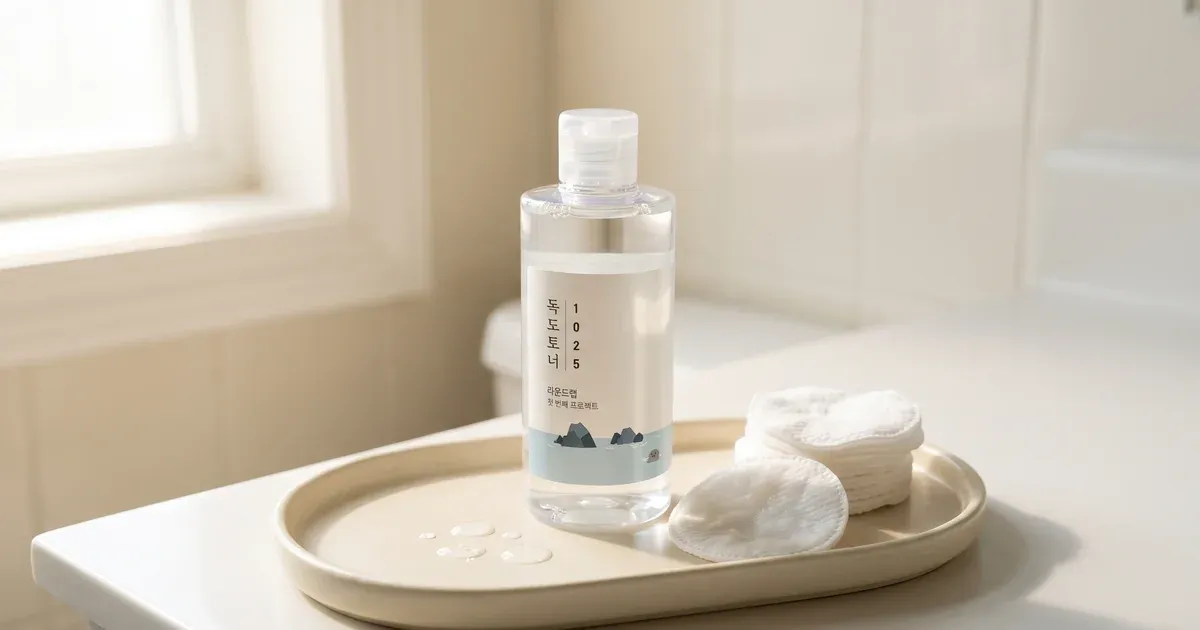
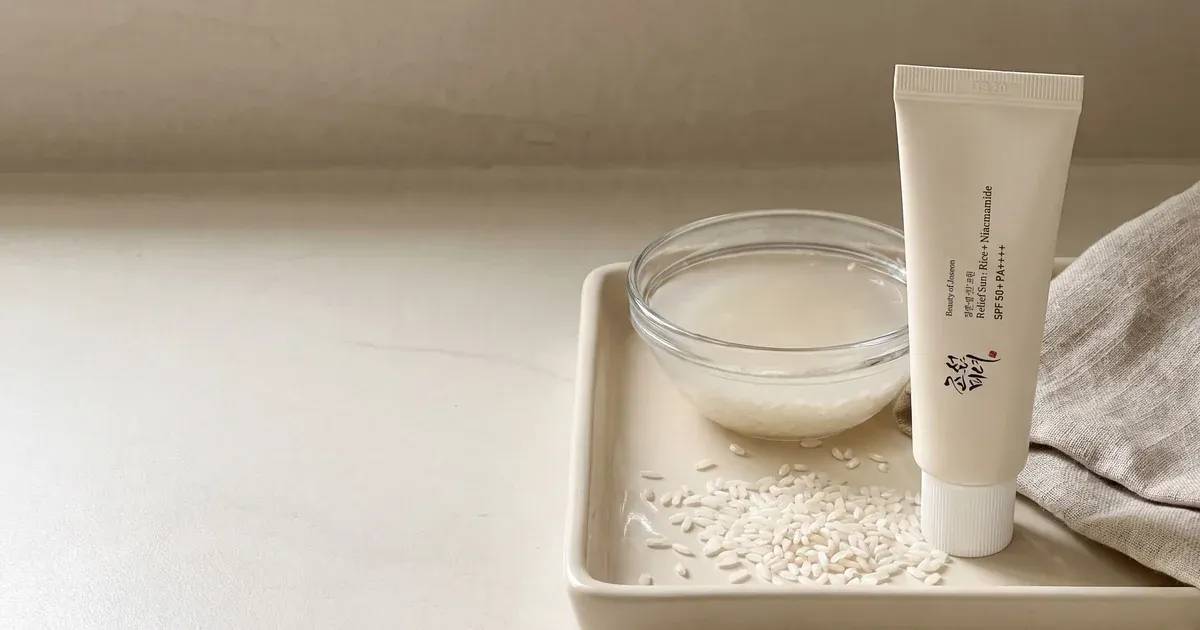
Western brands sell niacinamide as a hero — a single high-percentage serum with the ingredient on the label in giant type. Korean formulation philosophy treats it as a teammate: modest concentrations woven into toners, essences, sunscreens, and creams, so you accumulate a gentle dose across your whole routine rather than one strong hit.
Neither approach is wrong, but the K-beauty way suits beginners and sensitive skin especially well — you get the benefits almost by accident, with minimal irritation risk. It also pairs happily with the trend ingredients of the moment: niacinamide sits comfortably next to PDRN, snail mucin, and the whole soothing family in our ingredients guide.
How to add it to your routine
- Where: the serum step (after toner, before moisturizer) if using a dedicated serum — or simply via a toner/moisturizer that includes it. Check labels; you may already be covered.
- When: morning, evening, or both. It’s stable and sun-friendly.
- With what: almost anything. The old myth that niacinamide and vitamin C can’t mix has been thoroughly retired — modern formulas combine them on purpose. (Full layering guide coming soon on The Dew Journal.)
- Start: one product containing it, used consistently for a month, before judging.
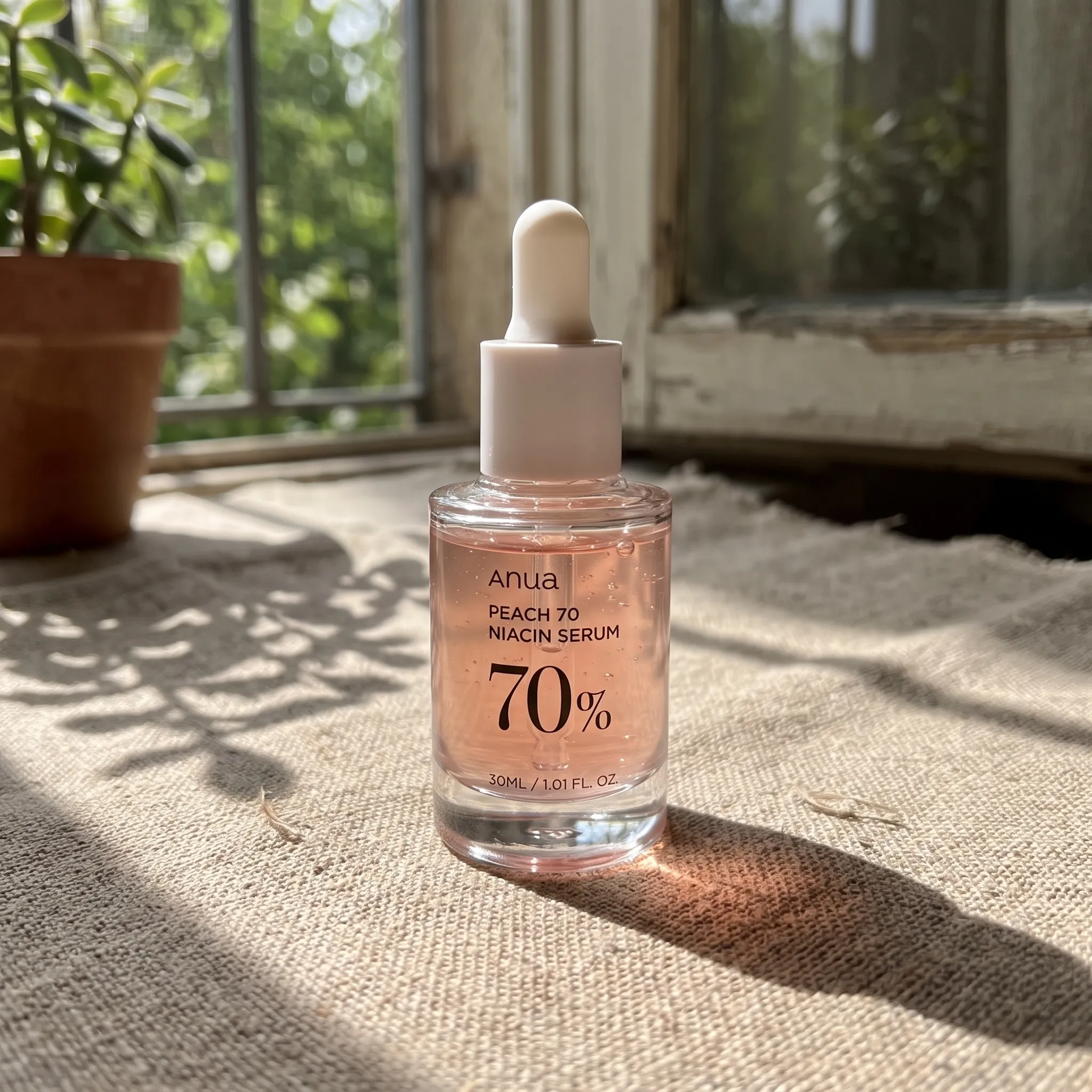
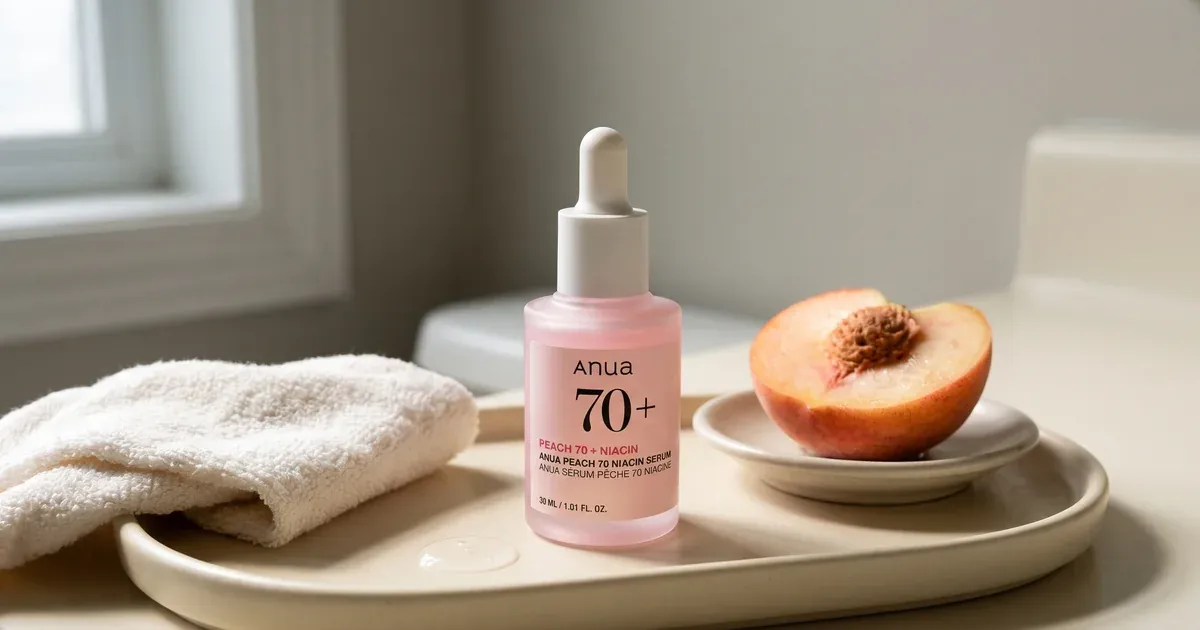
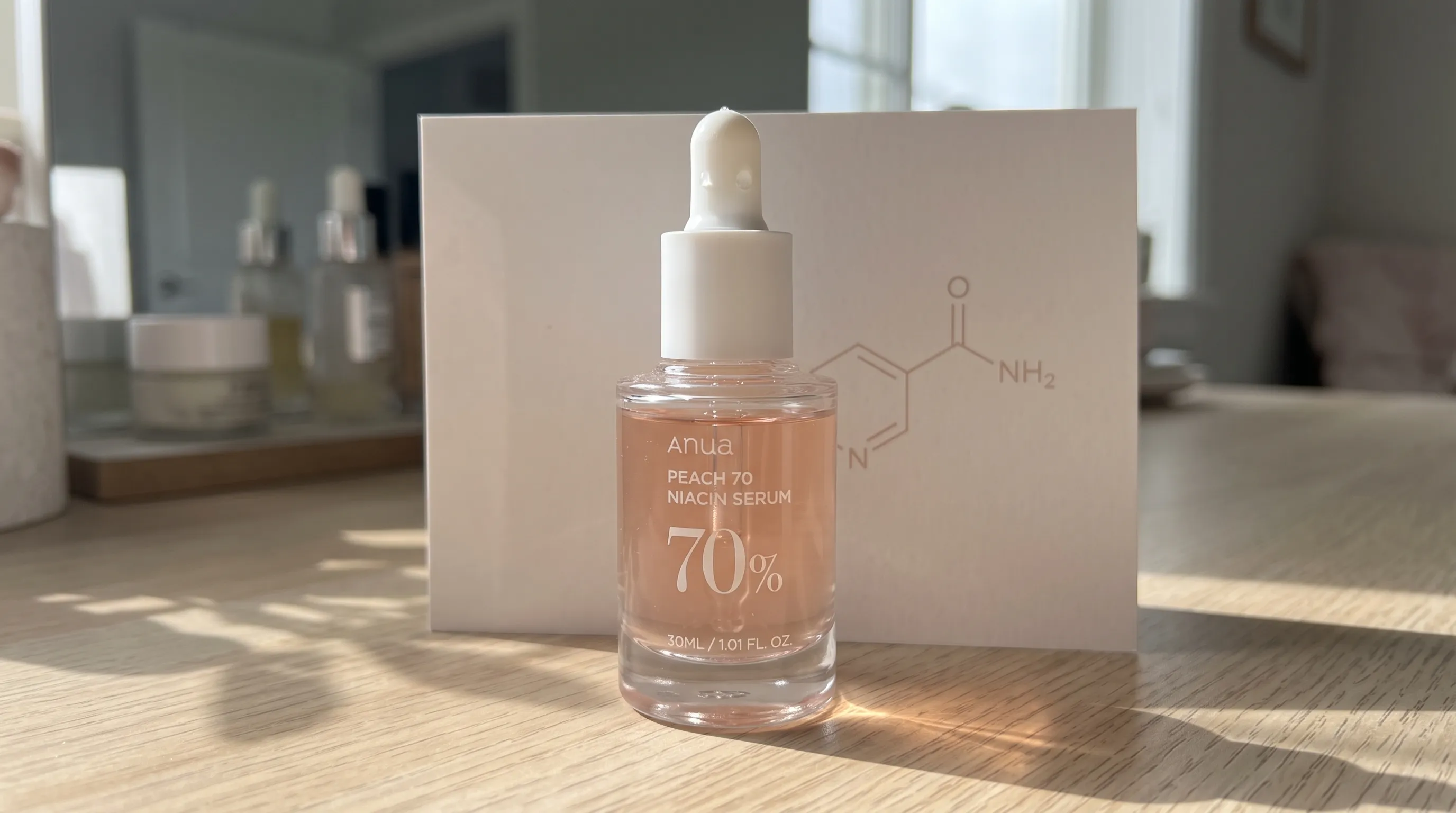
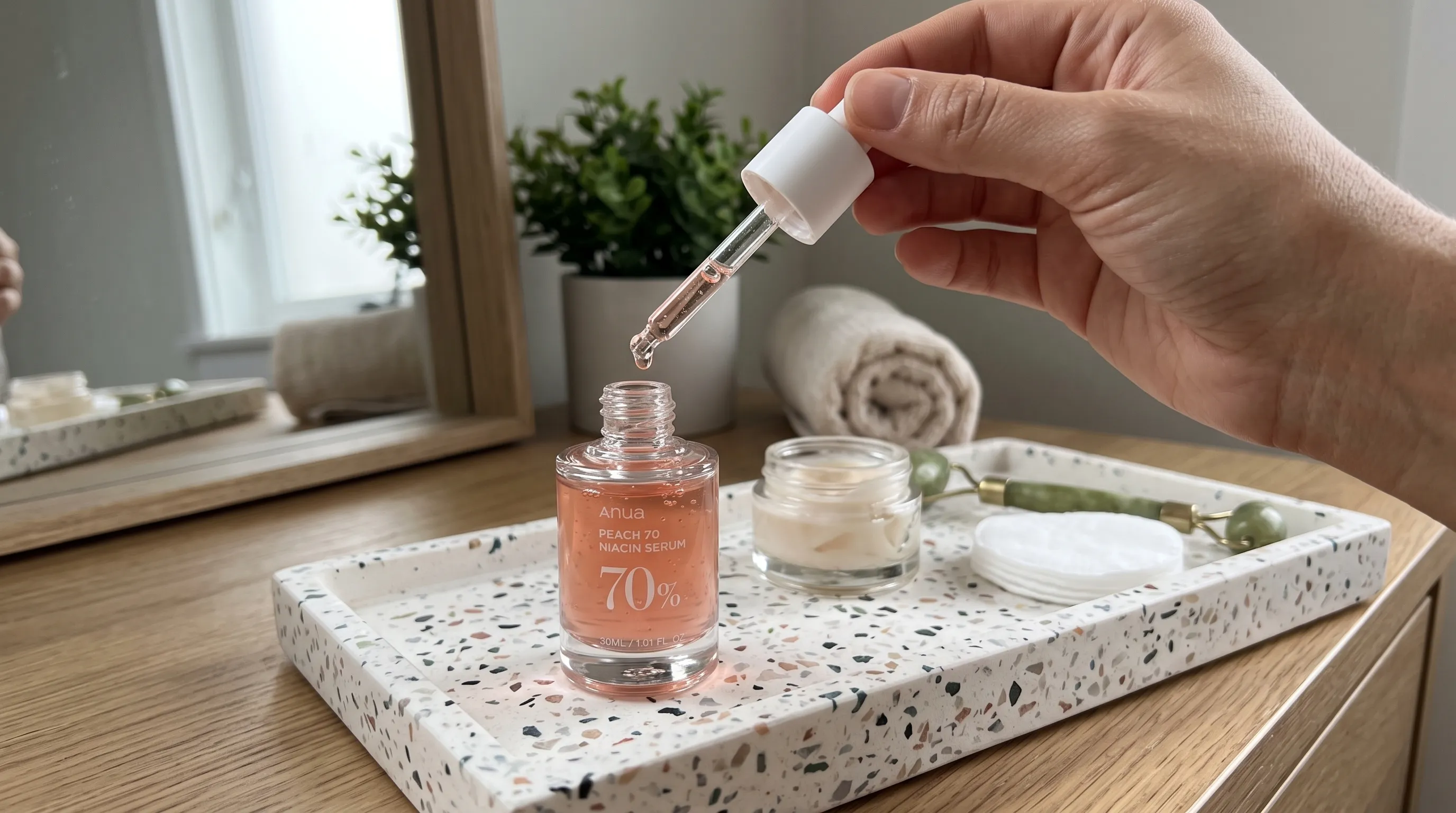
From my own routine: I’ve been testing the Anua Peach 70 Niacin Serum for the past month, and it has quickly earned a permanent spot on my vanity. The texture is beautifully lightweight and sinks in instantly, without any of the sticky, heavy residue typical of high-percentage Western serums. My T-zone looks noticeably less greasy by midday, and my overall skin texture feels smoother and more balanced. You’ll find it — and where to buy it — in the product box at the end of this article.
The bottom line
Niacinamide is the reliable sedan of skincare ingredients: unglamorous, everywhere, and genuinely useful — as long as you expect a sedan, not a rocket. Let it quietly support your barrier and tone from inside products you already use, and save your skepticism for anything that promises miracles.
Keep building your ingredient literacy with the full K-Beauty Ingredients Decoded guide — or see where niacinamide fits into a complete beginner routine.