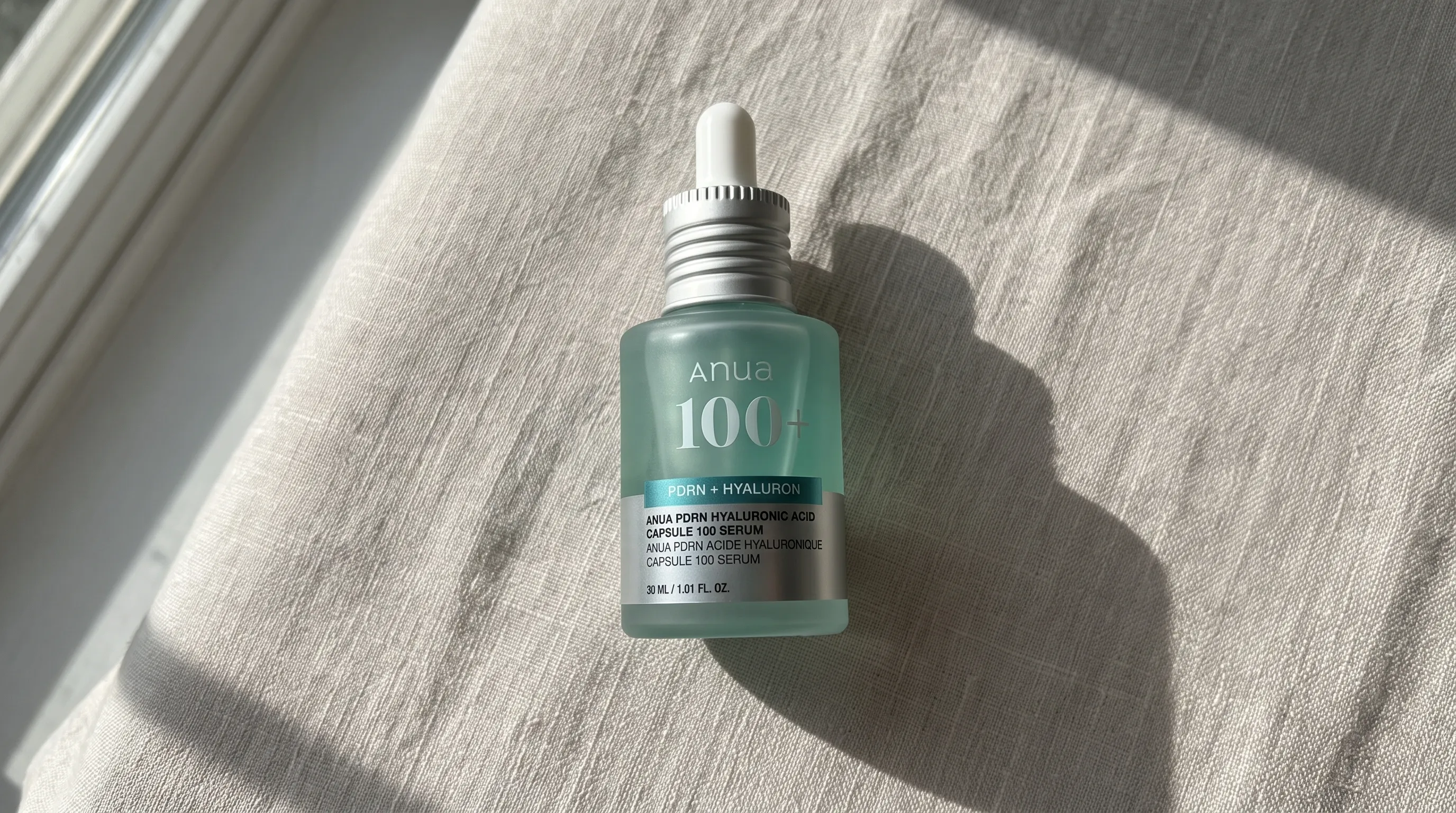
If you’ve browsed Korean skincare at all this year, you’ve run into PDRN. It’s on serum boxes, in TikTok captions, and all over Olive Young’s trending pages — usually next to the words “salmon DNA.” So what is PDRN in skincare, actually? Is it really fish DNA? And does putting it on your face do anything?
Short version: PDRN (polydeoxyribonucleotide) is a DNA-derived ingredient, most often sourced from salmon, that Korean brands are using in hydrating, skin-comforting serums. It has a genuinely interesting backstory in medicine — but the version you buy in a serum is a cosmetic ingredient, not a medical treatment. This guide unpacks the difference so you can decide whether it deserves a spot in your routine.
PDRN, decoded: what the letters mean
PDRN stands for polydeoxyribonucleotide — a long word for fragments of DNA that have been broken down into small, purified pieces. In K-beauty products, those fragments are typically extracted from salmon, which is why you’ll see “salmon DNA” used almost interchangeably with PDRN on packaging and in marketing.
Why salmon? The DNA fragments are relatively easy to purify from salmon milt (yes, that part), and the resulting molecules are well-tolerated on skin. In an ingredient list, you’ll usually spot it as sodium DNA, PDRN, or hydrolyzed DNA.
One thing worth clearing up early: PDRN in a serum is not “live” DNA doing genetic anything to your skin. It’s a purified biomolecule used for its moisturizing and skin-conditioning properties — closer in spirit to hyaluronic acid than to gene therapy.
Where the hype comes from: clinics vs. cosmetics
PDRN’s reputation was built in a medical setting, and this is where most of the confusion (and overpromising) starts.
In clinics, PDRN has been used in injectable form — you may have heard of “salmon DNA injections” or the so-called salmon sperm facial popularized by celebrities. Those are medical procedures performed by professionals, where the ingredient is delivered under the skin. Research on injected PDRN is where the more dramatic claims about skin repair originate.
In cosmetics, PDRN sits in a serum or cream and stays on top of your skin. It is a large molecule, so it doesn’t behave the way an injection does. What topical PDRN products are designed to do is more modest: support hydration, help skin feel soothed, and leave it looking plumper and more supple.
That gap matters. A serum sharing an ingredient name with a clinical procedure does not mean it delivers clinical results — and honest K-beauty coverage should say so. Early research on topical PDRN is limited, and results vary from person to person.
The Dew Journal take: treat PDRN serums as a comfort-and-hydration category with an interesting story, not a needle-free version of a clinic treatment. If a product page implies otherwise, that’s marketing, not evidence.
What a PDRN serum may actually do for your skin
Based on how these formulas are built (PDRN is almost never the only active in the bottle), here’s what you can reasonably expect:
- Hydration and plumpness. Most PDRN serums pair the ingredient with humectants like hyaluronic acid or glycerin, so well-hydrated, bouncy-looking skin is the core payoff.
- A soothed, comforted feel. Many formulas target skin that looks stressed or feels tight — think post-sun, post-retinoid, or just dehydrated winter skin.
- A “glass skin” finish. The texture of these serums tends to be lightweight and glossy, which is a big part of their appeal in Korean routines.
What a PDRN serum is not: a treatment for acne, scarring, or any skin condition. No topical cosmetic can legally or honestly make those claims, and nothing about PDRN changes that.
Who should (and shouldn’t) bother
Worth trying if you:
- Have dehydrated, dull, or stressed-looking skin and want a gentle hydrating step
- Are curious about K-beauty trends and want something low-risk (PDRN formulas are generally designed to be gentle)
- Already have your basics down — cleanser, moisturizer, sunscreen — and want a “nice to have” layer
Probably skip it if you:
- Are on a tight budget and don’t yet own a good sunscreen or moisturizer (spend there first — the boring truth is those matter more)
- Expect visible “regeneration” or clinic-level changes from a serum
- Have a known sensitivity to marine-derived ingredients (check with your doctor if unsure)
How to use PDRN in a Korean routine
PDRN serums slot into the essence/serum step — after cleansing and toner, before moisturizer. Morning or evening both work. Because these formulas are typically gentle, they layer easily with niacinamide and most other common actives. (We’ll cover layering in detail in our upcoming guide to combining actives without irritation — coming soon on The Dew Journal.)
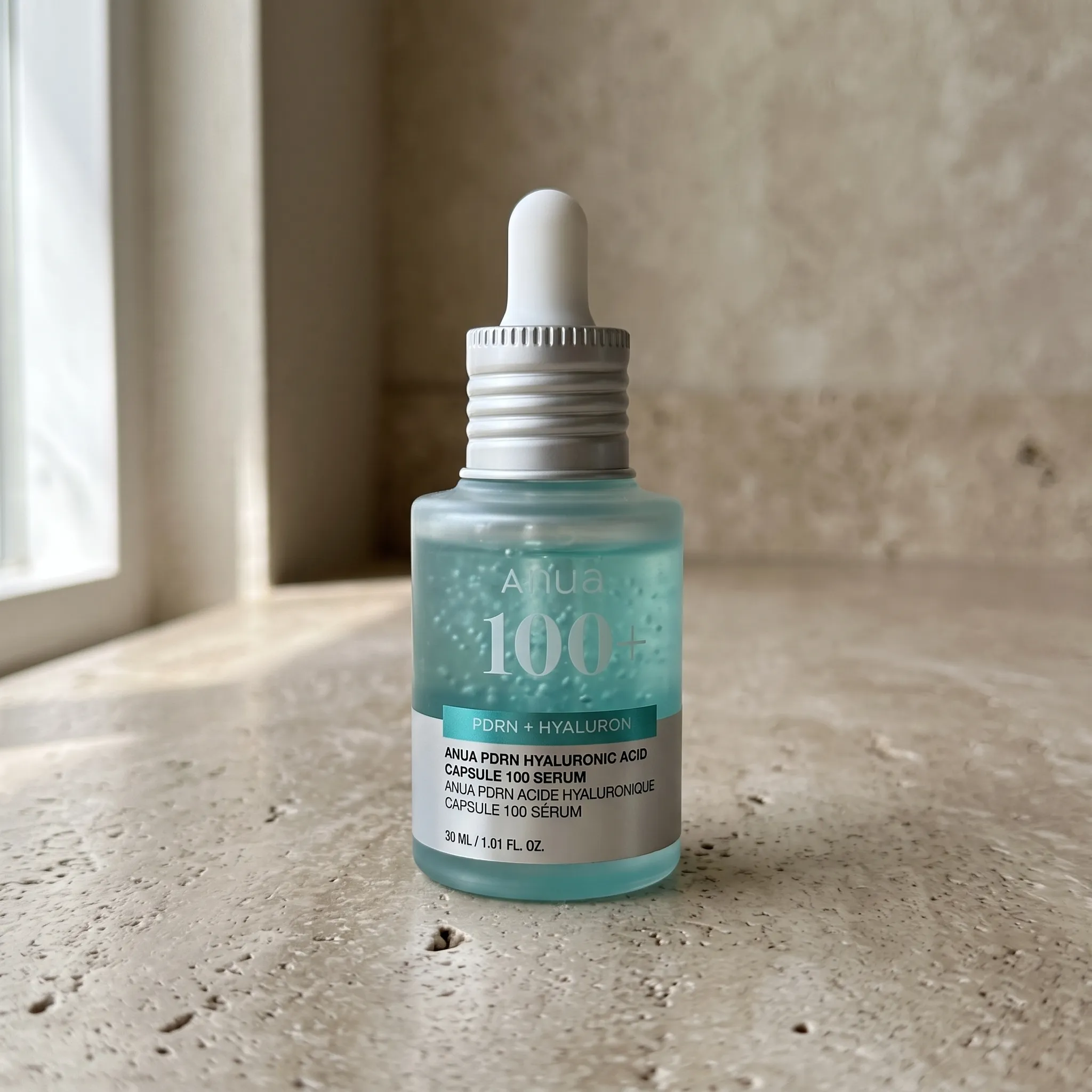
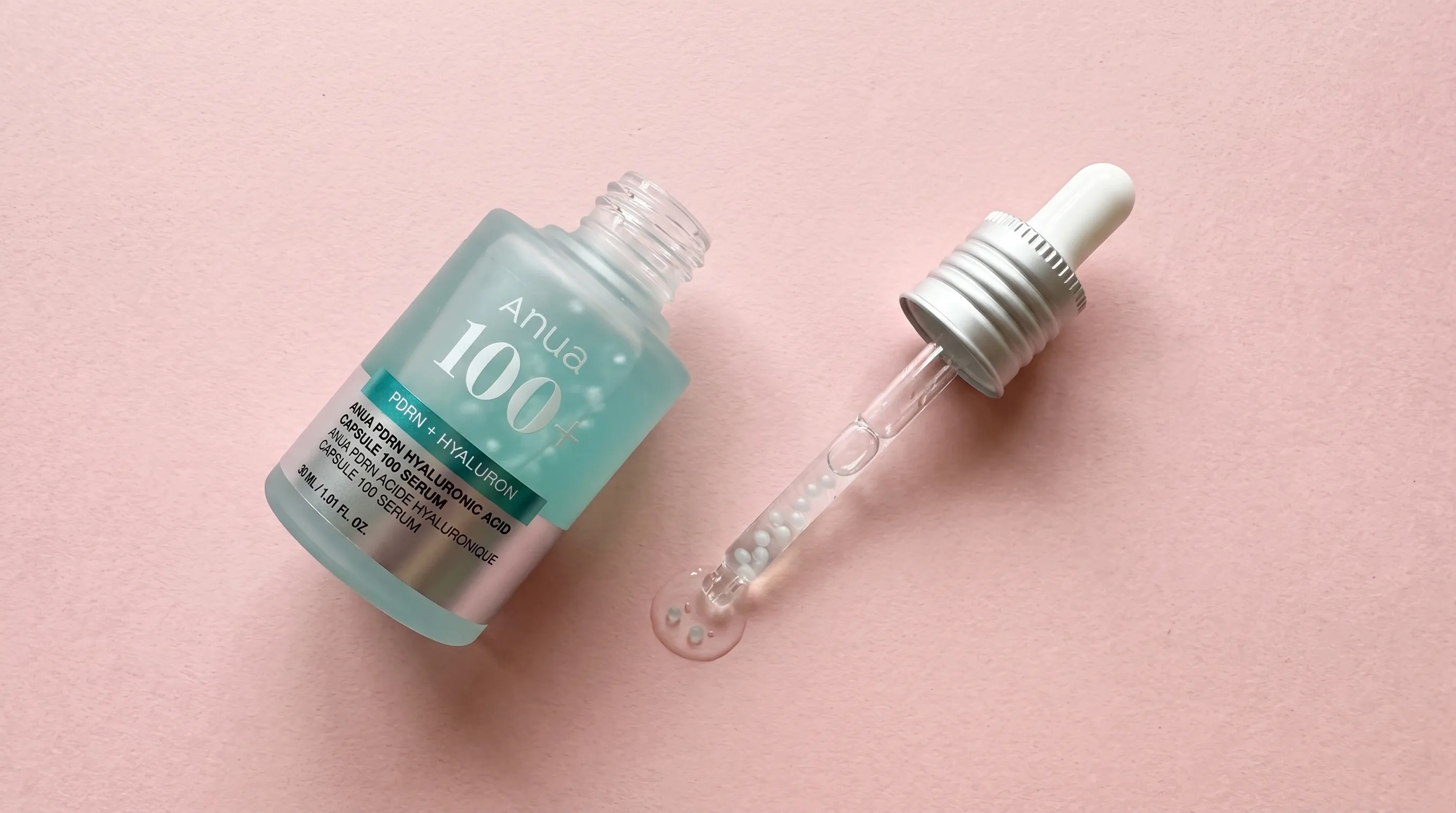
The product that put this category on the map for Western shoppers is Anua’s PDRN Hyaluronic Acid Capsule 100 Serum, the serum you’ve likely seen everywhere. We’ve now put it through 4 weeks of daily testing — read the full Anua PDRN serum review for the honest verdict, or find it (and where to buy it) in the product box at the end of this article.
First impressions from our testing: the first thing that stands out is the unique texture — it contains tiny visible capsules that melt instantly upon contact, leaving a very distinct, glossy “glass skin” sheen without feeling heavy. It provides a deeper, more sustained bounce than a standard hyaluronic acid serum, making my skin feel remarkably comfortable after an intensive retinoid night. It’s a lovely hydration layer, though you definitely need a proper moisturizer to lock that plush finish in.
The bottom line
PDRN is one of the most interesting stories in K-beauty right now: a medical-adjacent ingredient reborn as a gentle, hydrating serum category. Just keep your expectations calibrated — you’re buying hydration, comfort, and a lovely texture, not a clinic treatment in a bottle.
Want to understand what else is actually in your Korean skincare? Start with our full K-Beauty Ingredients Decoded guide — and if you’re PDRN-curious but skeptical, our upcoming deep-dive “Is PDRN Hype or Real?” is written for you.