Rice shows up all over Korean skincare: in toners, essences and cleansers, sometimes as plain rice extract and sometimes as a ferment with a long chemical name. It carries a lot of promise in the marketing, mostly around brighter, smoother skin. The useful questions are what rice actually brings to a formula, why brands bother fermenting it, and how much of the brightening story the evidence supports.
Below: what rice contains, why fermentation is used, what the research shows so far, why homemade rice water is a gamble, and how to find rice on a label.
This guide is put together from a board-certified dermatologist’s article and published research on fermented and rice-based ingredients, with each point linked to its source. We haven’t tested a rice product on our own skin for this piece (how we review).
What rice brings to skincare
Washing the face with the cloudy water left over from rinsing rice is a long-standing beauty habit. Dermatologist Jane Yoo says Korean beauty brands have modernized that tradition into toners, essences and cleansers built around fermented rice extract.
What is in it is fairly modest. According to Jane Yoo, rice water contains starches, small amounts of vitamins, minerals and antioxidants. She also points out that commercial K-beauty formulas typically use fermented rice extract or rice bran extract, not literal rice water.
Rice bran deserves a word of its own. A study by Yan and colleagues describes rice bran as the outer layer of the rice grain and notes that, because it is rich in bioactive components, it has long been used in cosmetics.
Why brands ferment ingredients
Fermented ingredients, sometimes called bioferments, are not unique to rice. A review by Majchrzak and colleagues defines them as ingredients extracted from natural raw materials through fermentation with suitable strains of microorganisms, such as yeast.
There are two technical reasons brands do it:
- Smaller molecules. The same review explains that fermentation converts large molecules into smaller structures, which can make fermented raw materials more compatible with skin than unfermented ones.
- Concentration and shelf life. Jane Yoo says fermentation concentrates active compounds and improves stability and shelf life.
Those are reasons the technique makes sense in a lab. They are not evidence that a particular bottle of rice ferment essence does more for your skin than a well-made product without it.
What the evidence shows so far
Start with what a dermatologist expects. Jane Yoo says the realistic benefit is mild hydration and soothing, from the starches and leftover nutrients. She is just as clear about the limits: dramatic claims that rice water alone cures hyperpigmentation or replaces sunscreen aren’t supported by evidence, and rice is not a substitute for proven actives like vitamin C, azelaic acid or sunscreen for pigmentation concerns.
The more exciting findings come from the lab, and they should be read that way:
- Fermented rice bran. Yan and colleagues identified compounds in a fermented rice bran extract including azelaic acid, ferulic acid, gamma-tocotrienols and squalene, mainly lipids and polyphenols. In tissue staining on mouse skin, collagen content after treatment rose by 10% compared with the control group.
- Rice ferment filtrate. Han and colleagues set out to test Saccharomyces/Rice Ferment Filtrate, a rice ferment made with yeast, against glycation, a process linked to skin aging through compounds called advanced glycation end products (AGEs).
Neither is a trial of a store-bought product on human faces. A result in mouse skin or a lab model tells researchers where to look next; it does not tell you what a toner will do for you.
Should you make rice water at home?
Homemade rice water is cheap, which is exactly why it keeps trending. Jane Yoo warns that raw, unfermented DIY rice water can harbor bacteria if it isn’t refrigerated and used quickly, and that it lacks the stability and concentration of a properly formulated, preserved commercial product.
If you want rice in your routine, a bottled product with a preservative system is the safer route. And on gentleness, the news is good: Jane Yoo calls rice a gentle, low-irritation ingredient overall, while still advising a patch test with any new product.
How to spot rice on the label
“Rice” on the front of a bottle can mean several different ingredients. On the full ingredient list, look for names such as:
- Oryza Sativa (Rice) Extract, a plain rice extract
- Saccharomyces/Rice Ferment Filtrate, rice fermented with yeast
- rice bran extract, sometimes listed by its botanical name
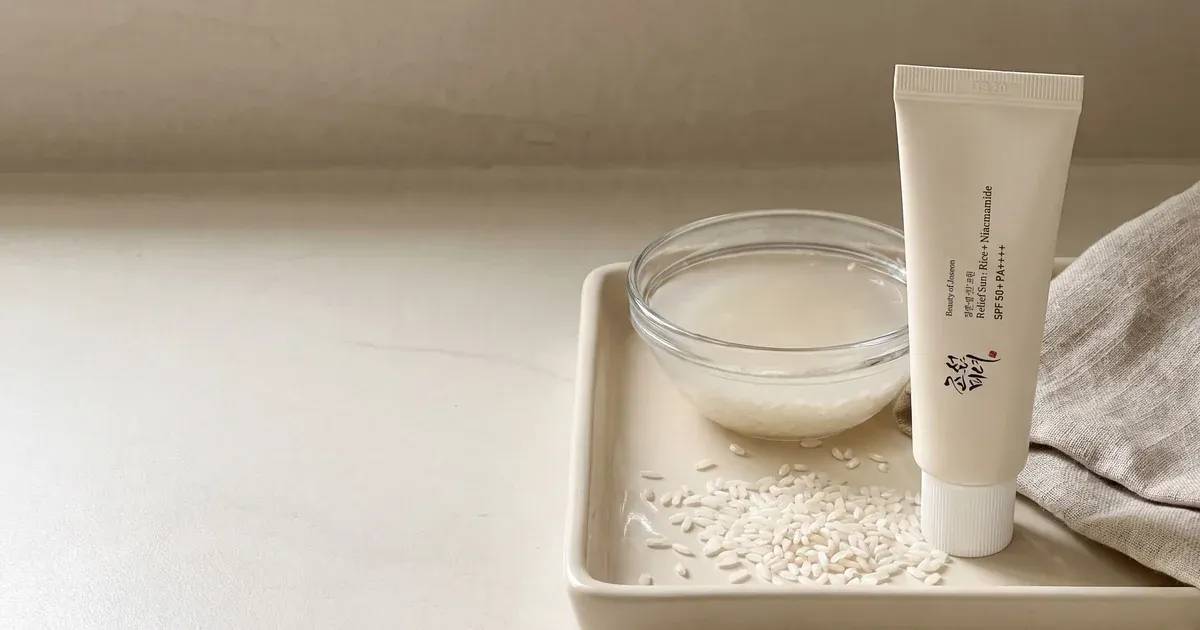
Position gives you a rough sense of how much is there, since ingredients are generally listed from most to least. One example we have covered: in the Olive Young listing for Beauty of Joseon’s Relief Sun, water comes first and Oryza Sativa (Rice) Extract comes straight after it. Our Relief Sun review covers that sunscreen in full.
If you are after soothing ingredients more broadly, our centella guide covers another K-beauty staple with more human research behind it.
FAQ
What does rice do in Korean skincare? Dermatologist Jane Yoo says rice water contains starches, small amounts of vitamins, minerals and antioxidants, and that the realistic benefit is mild hydration and soothing. Commercial K-beauty formulas typically use fermented rice extract or rice bran extract rather than literal rice water.
Why are skincare ingredients fermented? Jane Yoo says fermentation concentrates active compounds and improves stability and shelf life. A review by Majchrzak and colleagues adds that fermentation breaks large molecules into smaller ones, which can make fermented raw materials more compatible with skin than unfermented ones.
Does rice brighten skin or fade dark spots? Not on its own, as far as the evidence goes. Jane Yoo says claims that rice water alone cures hyperpigmentation or replaces sunscreen aren’t supported by evidence, and that rice is not a substitute for proven actives like vitamin C, azelaic acid or sunscreen for pigmentation.
Is it safe to make rice water at home for my face? It is riskier than a bottled product. Jane Yoo warns that raw, unfermented DIY rice water can harbor bacteria if it isn’t refrigerated and used quickly, and that it lacks the stability and concentration of a properly formulated, preserved product.
How do I spot rice on an ingredient list? Look for names such as Oryza Sativa (Rice) Extract or Saccharomyces/Rice Ferment Filtrate. Rice ingredients are generally gentle and low in irritation, but Jane Yoo still advises patch testing new products.
The bottom line
Rice and rice ferments are gentle, mildly hydrating ingredients with a sensible technical reason behind the fermentation. The brightening and anti-aging stories rest mostly on lab and animal work so far, so treat them as promising rather than proven. Rice will not stand in for sunscreen or for actives with stronger evidence, and a preserved bottled product is a safer bet than rice water made in your kitchen.