Pick up almost any Korean calming product and there’s a good chance the label says “cica” somewhere: the green tubes, the soothing toners, the creams sold for skin that’s feeling irritated or dry. In our K-beauty ingredients guide we called it the comfort blanket of K-beauty and promised a proper deep-dive. This is it.
Below: what the plant actually is, which compounds you’ll see on labels, what a published study measured (and how small that study was), what cica can’t do, who should be careful with it, and where it fits in a routine.
This guide is put together from published research and reporting, with each point linked to its source. We haven’t tested a cica product for this piece, so you won’t find any “after two weeks, my skin…” claims here (how we review).
What is centella asiatica (cica)?
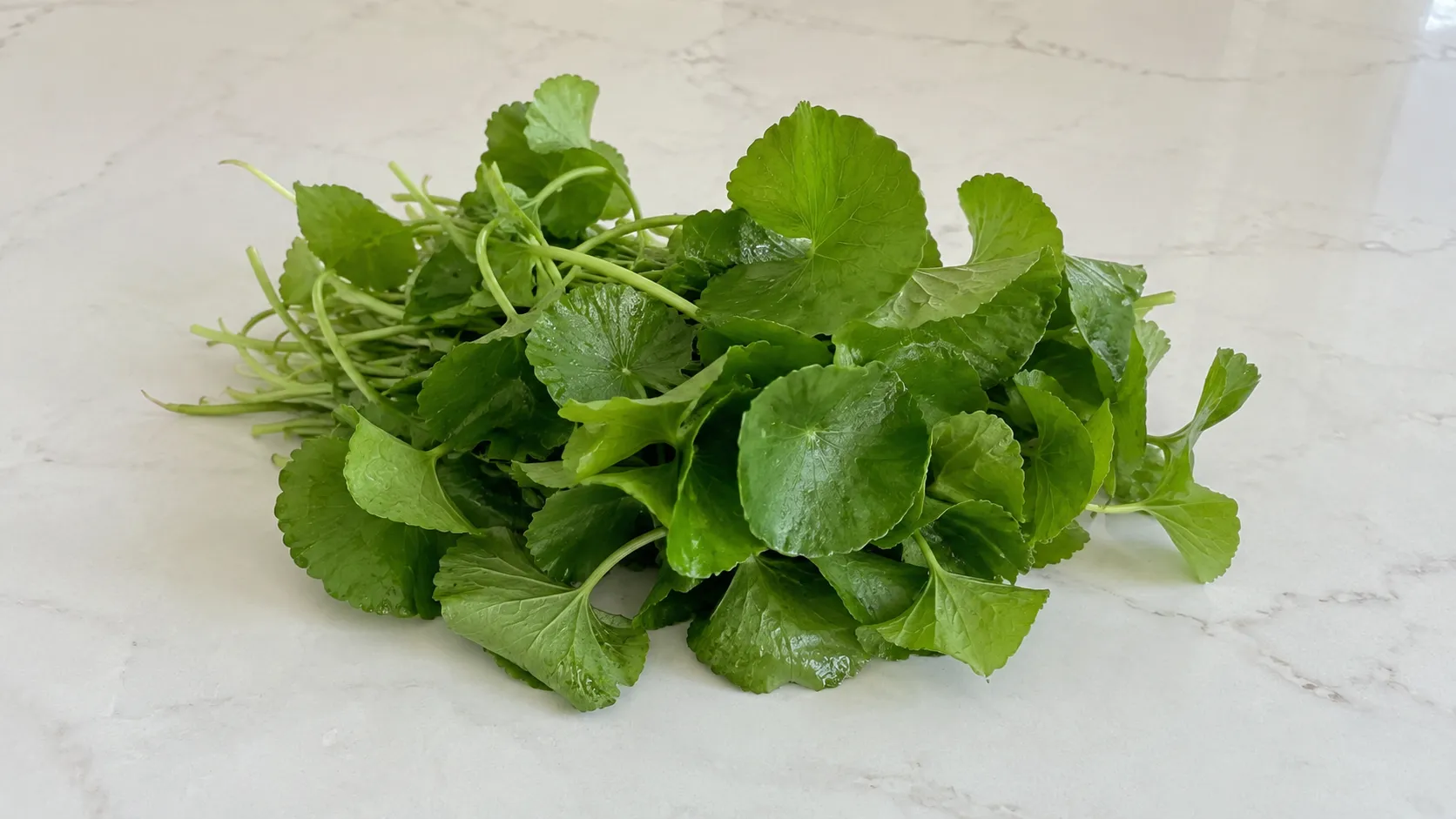
Cica is a nickname for Centella asiatica, a medicinal herb native to Asia. You’ll also see it called tiger grass or gotu kola (source). It belongs to the Apiaceae plant family and grows mainly in India and Pakistan, as well as Madagascar, equatorial Africa, Central America and the tropical parts of Oceania (Bylka et al., review).
Its reputation is old. In traditional Asian medicine, the herb has been used for hundreds of years on skin, especially for small wounds, scratches and burns. That history explains why skincare brands reach for it, but it isn’t evidence that a cream with a little centella extract does the same thing. Traditional use and a cosmetic on your face are two different questions, and the research section below deals with the second one.
Madecassoside, asiaticoside and the rest: what’s on the label
“Centella” on a label is a whole plant’s worth of chemistry. Researchers single out four compounds as the most important for skin: asiaticoside, madecassoside, asiatic acid and madecassic acid (Ratz-Łyko et al.). They belong to a group called saponins, which make up roughly 1% to 8% of the plant’s constituents (Bylka et al.).
That’s why you’ll see different names on different products. Some list centella asiatica extract, some name one compound such as madecassoside, and some list both. Madecassoside isn’t a rival ingredient to cica; it’s one of the pieces cica is made of, pulled out and named on its own.
What labels usually don’t tell you is how much is in the bottle. As our ingredients guide explains, position on the list is the best clue you get: an extract listed near the end is there in a small amount.
What the research actually shows
The clearest numbers come from a study by Ratz-Łyko and colleagues (full study). They made creams and gels containing 2.5% and 5% centella extract and asked 25 volunteers to apply them to their forearms twice a day for four weeks.
What they measured:
- Hydration. After four weeks, the outer layer of skin held more water: 25% more with the 5% cream and 22% more with the 5% gel.
- Water loss. Transepidermal water loss (TEWL), the water that escapes through the skin into the air, dropped by 18% with the 5% cream and 15% with the 5% gel. The plain cream and gel without any centella, used as a placebo, also lowered it by 5%.
- Redness. On patches of skin made red on purpose with a substance called methyl nicotinate, every formula with centella reduced redness more than the untreated area and the placebo did.
- Irritation. In a standard 48-hour patch test, the creams and gels didn’t cause irritation or allergic reactions. The volunteers were healthy, with no skin conditions.
Put simply: in this group, centella formulas helped skin hold water and calmed deliberately triggered redness, and they were well tolerated.
What cica can’t do (and what the study can’t tell you)
That study is encouraging, and it’s also small. A few things it can’t tell you:
- It was 25 people. That’s a starting point, not a settled answer.
- It was forearms, not faces. Nobody in the study put it on their face.
- The volunteers had healthy skin. It says nothing about skin that is already irritated, broken out or diagnosed with a condition.
- The base cream helped too. The placebo without centella also cut water loss by 5%, so part of any moisturizer’s effect comes from being a moisturizer.
- Your product’s dose is unknown. The study used 5% extract. Most labels don’t say how much centella they contain, so you can’t assume your toner is anywhere close.
And the big one: cica in a cosmetic is not a treatment. It won’t clear acne, heal eczema, fade scars or close wounds. If your skin needs any of that, a dermatologist is the right first stop, not a calming cream.
Who should be careful with cica?
For most people, cica is about as low-drama as skincare ingredients get. Side effects are rare, but they do happen: allergic contact dermatitis, which can look like a red, itchy rash, has been reported (source), and a medical review notes local allergic reactions and burning, especially when it is used on the skin (Bylka et al.).
So: if you already know you react to the plant extract, skip it. If you don’t know, patch test a new product on a small area before putting it on your whole face. That goes double if your skin is irritated right now, since the reassuring 48-hour patch test in the study above was done on healthy skin.
Where cica fits in your routine
Cica is an easy ingredient to slot in. Because it is soothing, it’s compatible with most skincare ingredients, and you can apply it after stronger actives like retinoids or acids (source).
You’ll find it in toners, serums, ampoules and creams. Rather than stacking three cica products, pick the format for the step your routine is missing: a toner if you want something light after cleansing, a cream if your last step needs to feel more comforting. New to building a routine? Our Korean skincare routine for beginners walks through the order of steps.
If you’re putting together a calming routine, niacinamide is the other ingredient you’ll keep running into; our niacinamide guide covers what it does. Whatever you add, add one new product at a time, so if your skin reacts you know which one to blame.
FAQ
What is cica in skincare? Cica is a nickname for Centella asiatica, a medicinal herb native to Asia that is also called tiger grass or gotu kola. Skincare uses its extract and the compounds inside it, mainly madecassoside, asiaticoside, asiatic acid and madecassic acid.
What is madecassoside, and is it the same as centella? Madecassoside is one of the compounds inside centella, not the whole plant. Researchers single out four of them as the most important for skin: asiaticoside, madecassoside, asiatic acid and madecassic acid. A label may list the plant extract, one of these compounds, or both.
What does the research say cica does for skin? In one study of 25 volunteers, creams and gels with 5% centella extract, applied twice a day to the forearm for four weeks, raised skin hydration by up to 25% and cut water loss through the skin by up to 18%. The plain base without centella also cut water loss by 5%, and the group was small, so treat it as a promising sign rather than proof.
Can cica cause a reaction? Side effects are rare, but allergic reactions, including a red, itchy rash, and burning have been reported, especially when it is used on the skin. If you know you react to the plant, skip it; otherwise patch test a new product first.
Can you use cica with retinol or acids? Generally yes. Because it is soothing, centella is compatible with most skincare ingredients and can go on after stronger actives like retinoids or acids. Add one new product at a time so you can tell what your skin is reacting to.
The bottom line
Cica has earned its spot on K-beauty shelves, just not as a miracle. The plant has a long traditional history, its key compounds are well identified, and a small study found centella formulas helped skin hold water and settle deliberately triggered redness. That’s a reasonable case for trying it if your skin tends to run dry, tight or easily flushed, and a weak case for expecting it to fix anything. Think of it as a comfortable, low-risk supporting player, not a treatment.
Curious how it compares with heartleaf, mugwort and the rest of the soothing family? Our K-beauty ingredients guide puts them side by side.