You have a vitamin C serum, a niacinamide serum, and a comment somewhere online telling you never to use them together. Maybe you have also noticed that half the bottles on your shelf list niacinamide, and you are wondering whether layering them is too much.
This guide answers those questions in order: can you pair the two, where the warning came from, what happens when people actually use both, how to layer them, and what to do about doubling up on niacinamide.
It is put together from Cleveland Clinic, the AAD, the US association of dermatologists, and published research, with each point linked to its source. We haven’t tested these products on our own skin for this piece (how we review).
The short answer: yes
Yes, you can use vitamin C and niacinamide in the same routine. Cleveland Clinic lists vitamin C among the products niacinamide is often paired with, alongside moisturizers with ceramides, hyaluronic acid and retinol.
There is a good reason people want both. In a Delphi consensus published in JAAD, 62 dermatologists at 43 centers agreed on 23 go-to skincare ingredients. Niacinamide made the list for redness and dark spots, and vitamin C for fine lines and dark spots. If uneven tone is your concern, the two point at the same goal. For what niacinamide does on its own, see our niacinamide guide.
Where the warning came from
The worry isn’t invented. It comes from lab chemistry, and it is worth knowing what that chemistry actually showed.
In a lab study by Ahmad and colleagues, vitamin C (ascorbic acid) dissolved in water and exposed to UV light broke down about 2 times faster when niacinamide was in the solution, because niacinamide took part in the light-driven reaction. The same group tested creams under UV light and found that niacinamide sped up the breakdown of vitamin C there too.
Notice what those studies measured: what happens to vitamin C inside a solution or a cream that is sitting under UV light. They did not test the two on anyone’s skin, and they did not show that the pair harms skin. The practical lesson is about storage. Cleveland Clinic notes that vitamin C is sensitive to sun, heat and light, and suggests choosing a product in a dark glass bottle.
What happens when people actually use both
Direct evidence on people using both is limited, but there is some. In a randomized study where the assessors didn’t know who used what, 60 women aged 20 to 50 with melasma used either a serum containing 5% niacinamide, 1% tranexamic acid, 0.2% of a stabilized form of vitamin C and hydroxy acids, or a 4% hydroquinone cream.
The serum was tolerated better than hydroquinone, and the reduction in melanin was similar in both groups.
Two caveats. Two of the authors are employees of the L’Oréal group, and the serum came from Vichy, so this is not an independent test. And the vitamin C in that serum was a small amount of a stabilized form, not the kind of high-strength vitamin C serum many people buy. The fair summary: we found no evidence that applying the two together harms skin, and one industry-run trial where a formula with both was well tolerated.
How to layer them
The basic rule from Cleveland Clinic is to go from the lightest, thinnest product to the heaviest, thickest one.
For vitamin C, Cleveland Clinic says to apply it after cleansing, and after toner if you use one. It is safe at night, but the morning is the better slot, because vitamin C acts as a backup to your sunscreen. Niacinamide is more flexible: Cleveland Clinic says it is generally used once or twice a day after gentle cleansing.
That leaves two simple setups. Use vitamin C in the morning and niacinamide at night, or use both in the morning and layer them by texture, thinner first, then sunscreen. Most people get no side effects from vitamin C, but dryness, itching or redness can happen, and if your skin is sensitive, start with a lower strength.
Add one new product at a time. The AAD suggests applying it to a small test spot twice a day for seven to 10 days first. For where other actives fit in, see our guide to layering actives.
Using two products with niacinamide
Niacinamide shows up in toners, serums, sunscreens and creams, so it is easy to end up with two products that contain it.
Cleveland Clinic says most products contain 5% niacinamide or less, and that people with sensitive skin should start slowly with a lower strength. In the safety review by the CIR expert panel, niacinamide caused no stinging at concentrations up to 10% and no irritation in use tests at concentrations up to 5%.
Two products don’t automatically mean too much, but the amounts add up on your skin, and those tests looked at single products, not the combined total of two. If your skin is sensitive, keep one niacinamide product and check the strength on the label. Some serums already contain 5% on their own, so one product may be all you need.
One bottle with both
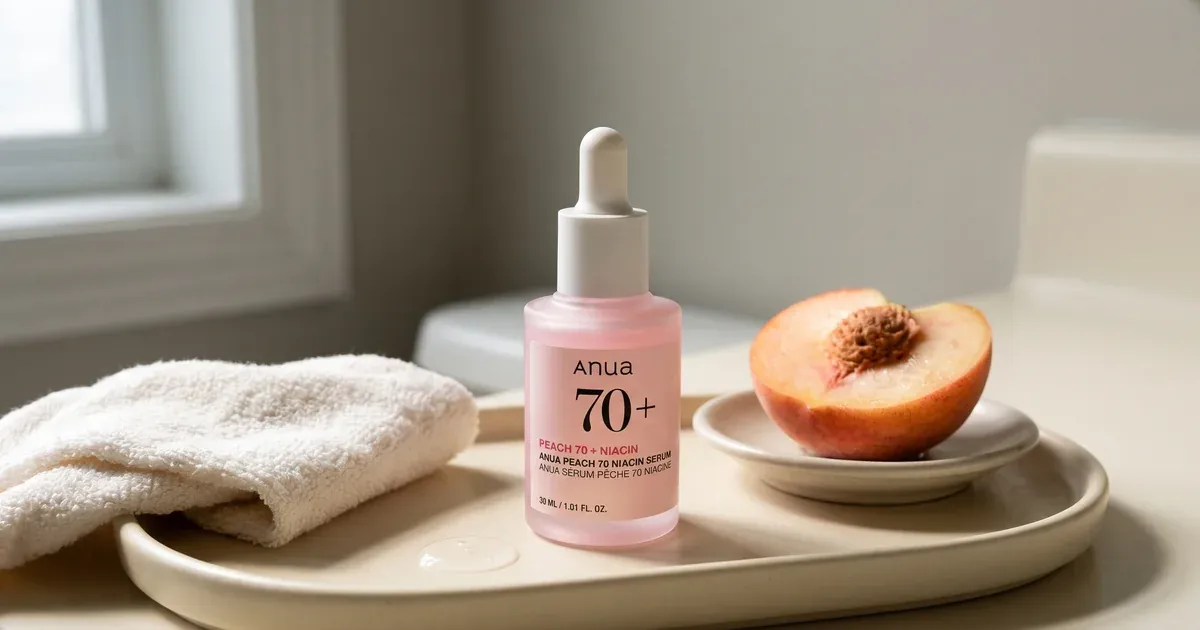
If you would rather have both in one step, the Anua Peach 70 Niacin Serum has niacinamide right after peach extract and glycerin at the top of its full ingredient list, which also includes 3-O-ethyl ascorbic acid, a vitamin C derivative, plus alpha-arbutin and two mild exfoliants, betaine salicylate and lactobionic acid. It also contains fragrance, which matters if your skin reacts to it.
On Olive Young Global, the 30ml bottle was €18.91 (US$19.90) for delivery to Germany when we checked on 9 November 2026, down from €23.75 in a sale. Prices change with sales and exchange rates, so check at checkout.
Paid link: The Dew Journal earns a commission on purchases, at no cost to you.
For texture and what users say, see our full Anua Peach 70 Niacin Serum review.