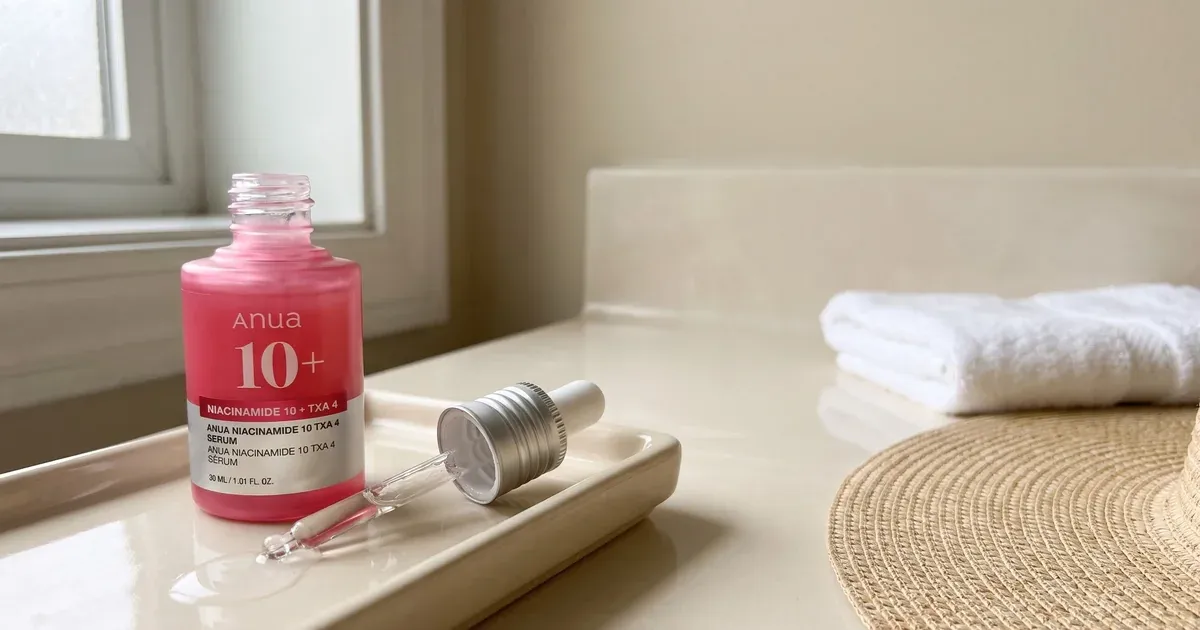
Some products pictured on this page are shown for illustration only and aren’t covered in this article.
Tranexamic acid keeps turning up on the labels of Korean serums sold for dark spots, usually shortened to TXA. It sounds clinical, and it is: the ingredient started life as a medicine. So the fair questions are what it actually is, what it is supposed to do to pigment, and how much of the research applies to a serum you buy off the shelf.
Below: what tranexamic acid is, how it is thought to work, what the studies show and where they stop, side effects, and how to fit a TXA serum into a routine.
This guide is put together from the AAD, DermNet and published research on tranexamic acid, with each point linked to its source. We haven’t tested a TXA serum on our own skin for this piece (how we review).
What tranexamic acid is
Tranexamic acid is an antifibrinolytic agent, a drug that helps blood clot, and it is commonly used for heavy menstrual bleeding, according to DermNet. Dermatologists noticed it could also help with pigment, which is how it ended up in skincare.
It helps to keep two very different products apart:
- The prescription medicine. The AAD says that when tranexamic acid is prescribed for melasma, it’s usually a pill taken twice a day.
- The topical version. DermNet notes that a topical tranexamic acid 5% cream is under investigation for melasma.
The K-beauty serums with TXA on the label belong to the second group: cosmetics you apply to the skin, not the tablet a dermatologist prescribes.
How it is thought to work on pigment
Nobody has the full picture yet. DermNet says the mechanism of tranexamic acid in skin conditions is not fully understood.
The leading explanation runs through UV light. A literature review by Perper and colleagues says tranexamic acid, whether taken orally, applied topically or delivered through physical methods, works by inhibiting plasmin activity triggered by UV light in keratinocytes, the main cells of the outer skin.
DermNet lists further proposed effects, including reduced melanin production by changing how keratinocytes interact with melanocytes, the cells that make pigment, and reduced activity of tyrosinase, an enzyme melanin production depends on. Treat these as working theories rather than settled science.
What the research shows
Most of the evidence is about melasma, the patchy brown discoloration of the face. The AAD says that in studies, tranexamic acid has been shown to decrease melasma patches when other treatments fail to work.
Three pieces of research are worth knowing:
- A meta-analysis. Zhang and colleagues pooled 21 eligible trials. The combined results linked tranexamic acid with lower scores on the Melasma Area and Severity Index (MASI) and the Melanin Index, two standard ways of measuring melasma.
- A literature review. Perper and colleagues concluded that tranexamic acid for melasma is equally effective or more effective than other standard therapies and may cause fewer side effects.
- A recent randomized trial. Ghasemiyeh and colleagues randomly assigned 99 patients to three groups for three months. They compared a niosomal tranexamic acid 2%/niacinamide 2% cream and a conventional tranexamic acid 5%/niacinamide 4% cream with 4% hydroquinone cream, the gold standard. Both tranexamic acid creams were as effective as hydroquinone, while adverse reactions and relapse were seen in the hydroquinone group.
Two caveats before you take that to the shop. The meta-analysis and review cover oral and other forms, not only creams. And the creams in these trials were study formulas at stated strengths; a serum on the shelf is a different product, and its label may not tell you how much tranexamic acid it holds. Evidence for other kinds of dark spots, such as marks left after acne, is thinner.
Side effects and when to see a dermatologist
In the Zhang meta-analysis, side effects were minor. The few reported cases included skin irritation and dryness (xerosis), hypopigmentation (lighter patches) and an urticarial rash, along with a mild stomach reaction and lighter periods, which point to the oral form rather than a cream.
For a serum, the usual rule applies: try it on a small patch of skin before using it all over your face.
It is also worth being sure what you are treating. The AAD notes that melasma can sometimes look like another skin condition, and that a dermatologist can tell you whether you have melasma or something else and what may help. A spot that is new, changing or not responding to anything deserves that visit.
How to use a TXA serum
Sun protection comes first, whatever serum you choose. The AAD says sunlight causes the skin to make more pigment, which can darken existing melasma and cause new patches. Its advice: wear a wide-brimmed hat outdoors, seek shade, and apply a broad-spectrum sunscreen with SPF 30 or higher throughout the day. A brightening serum used without sunscreen is working against the tide.
A few practical points for the serum itself:
- Check the ingredient list. “TXA” on the front is a label; look for tranexamic acid in the full ingredient list.
- Expect niacinamide nearby. Many Korean TXA serums pair the two, and the Ghasemiyeh trial above tested that same pairing. Our niacinamide guide covers what niacinamide does on its own.
- Layer it sensibly. If you already use other actives, our guide on how to layer actives walks through order and what to keep apart.
Pigment fades slowly. Give a serum steady, daily use alongside sunscreen before judging it.
FAQ
What is tranexamic acid? It started as a medicine, not a skincare ingredient. DermNet describes tranexamic acid as an antifibrinolytic agent commonly used for heavy menstrual bleeding. In skincare it shows up in serums aimed at dark spots, often shortened to TXA on the label.
How does tranexamic acid work on dark spots? A literature review by Perper and colleagues says it works by inhibiting plasmin activity triggered by UV light in keratinocytes, the main cells of the outer skin. DermNet adds that its mechanism in skin conditions is not fully understood.
Does topical tranexamic acid actually work? Most of the evidence is in melasma. A meta-analysis of 21 trials by Zhang and colleagues linked tranexamic acid with lower melasma severity scores, and a randomized trial by Ghasemiyeh and colleagues found tranexamic acid and niacinamide creams as effective as hydroquinone cream, the standard comparison treatment. Evidence for other kinds of dark spots is thinner.
Does tranexamic acid have side effects? In the Zhang meta-analysis, side effects were minor, with a few cases of skin irritation and dryness among others. Patch test a new serum first, and see a dermatologist if your spots change or don’t respond, since melasma can look like other conditions.
Do I still need sunscreen with tranexamic acid? Yes. The AAD says sunlight makes skin produce more pigment, which can darken melasma and cause new patches, and recommends a broad-spectrum sunscreen of SPF 30 or higher throughout the day.
The bottom line
Tranexamic acid has a respectable research record for melasma and a much thinner one for other dark spots. In the trial evidence it holds up well against hydroquinone with fewer complaints, which makes a TXA serum a reasonable, gentle option to try. It will not do the job of sunscreen, and it is not a substitute for a dermatologist when a spot is new, changing or stubborn.