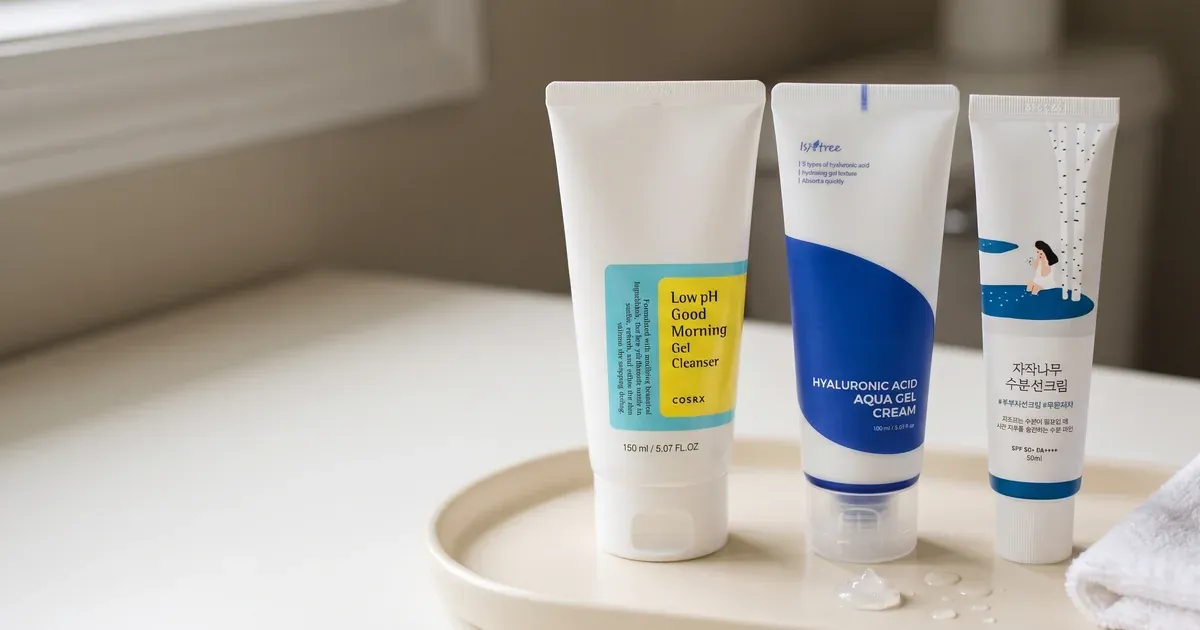
If you’ve ever searched “Korean skincare routine,” you’ve probably seen the famous 10 steps — and quietly closed the tab. Ten products, twice a day, in the right order? That’s not a routine, that’s a part-time job.
Here’s the honest truth from someone who lives where these products launch: most people in Korea don’t use 10 steps either. The 10-step framework was a Western marketing story. What actually matters is a small set of well-chosen products, used consistently.
This guide gives you exactly that: the four products that do most of the work, how to use them, what to skip for now, and what to add later once your skin (and your budget) is ready.
Why less actually works better
Skin has a fairly simple job description: keep moisture in, keep irritants out. Almost everything a beginner routine needs to do supports those two functions — cleanse gently, hydrate, protect from the sun.
Piling on ten products from day one creates two problems. First, if something breaks you out, you’ll have no idea which product did it. Second, several active ingredients layered carelessly can leave skin more irritated than before you started.
Korean skincare culture gets this right in a way that often gets lost in translation: the philosophy is consistency over intensity. A simple routine you actually do every day beats an elaborate one you abandon by Thursday.
For years, I trapped my skin in a vicious cycle of a rigorous 9-step routine, thinking more meant better, only to battle constant redness and micro-breakouts. The turning point came when I stripped it down to just the essentials: a gentle cleanse, real hydration, and barrier protection. Within three weeks, the chronic irritation subsided, and my skin finally regained its natural, healthy bounce.
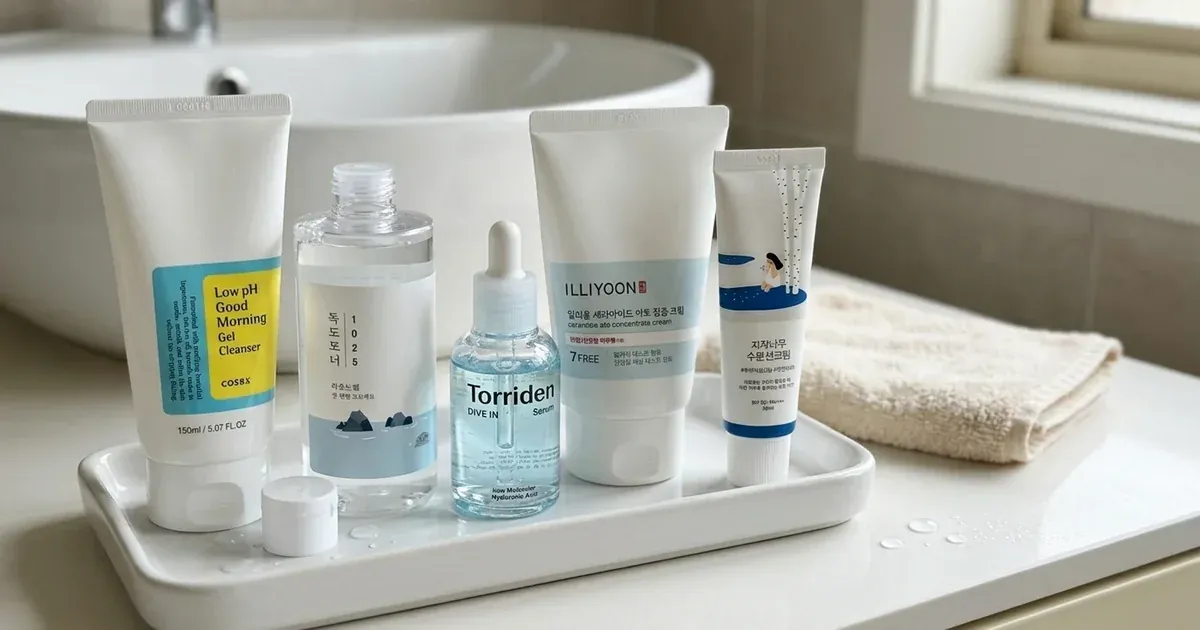
The core four: what you actually need
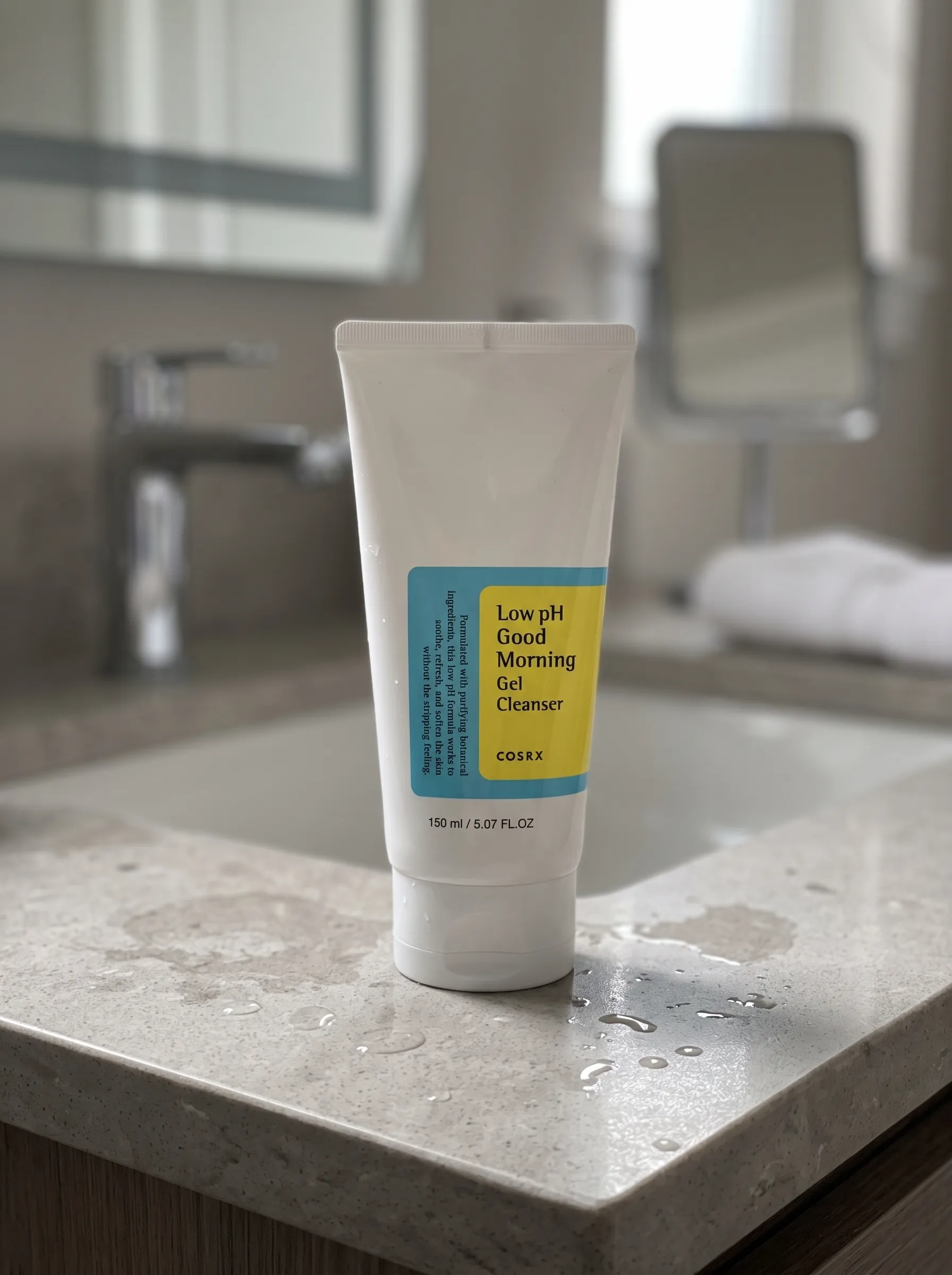
Step 1: A low-pH gel or foam cleanser
Everything starts here. A cleanser that’s too harsh strips the skin barrier, and no moisturizer can fully compensate for that. Look for the words “low pH” (around 5–6) on the label — Korean brands print this proudly, because it matters.
Use it in the evening, and either water or a quick cleanse in the morning depending on how oily your skin runs. Massage for about 30 seconds with lukewarm — never hot — water.
What to look for: gel or soft foam texture, low pH, no strong fragrance if your skin is reactive.
Step 2: A hydrating toner (optional, but worth it)
The K-beauty toner is not the harsh, alcohol-soaked astringent you might remember. It’s essentially a first drink of water for the skin: a lightweight liquid that rehydrates right after cleansing and helps everything after it absorb more comfortably.
If your skin is dry or feels tight after cleansing, this is the first “extra” step to add. Pat it in with your palms — no cotton pad needed, and you’ll waste less product.
Step 3: A moisturizer that matches your skin type
This is where “know your skin” pays off:
- Oily or combination skin — a gel or gel-cream that absorbs fast
- Normal skin — a light lotion or cream
- Dry skin — a richer cream, applied on slightly damp skin
The moisturizer’s job is to seal in the hydration from your toner and keep your barrier comfortable. It doesn’t need exotic ingredients to do that job well.
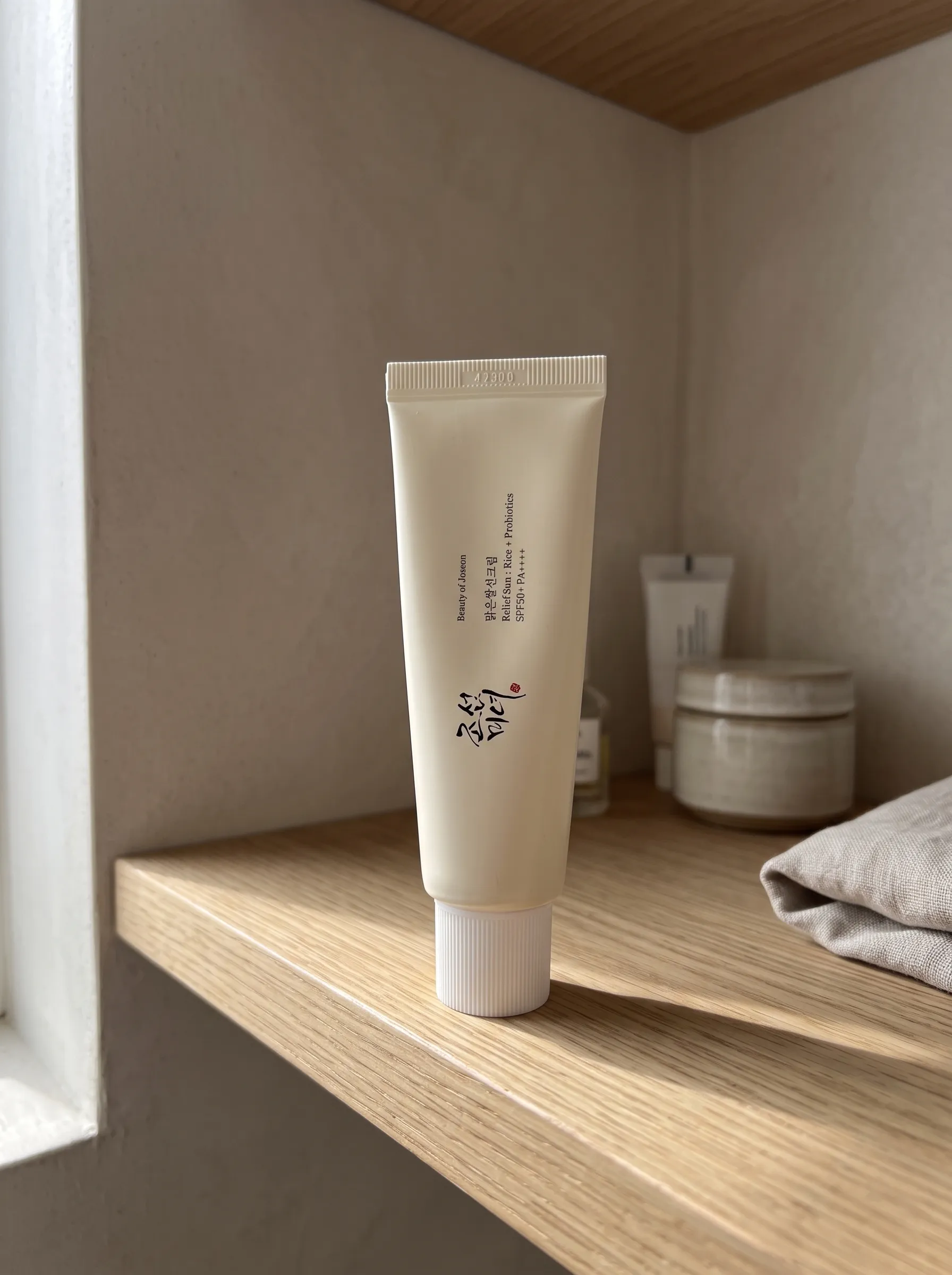
Step 4: Sunscreen — the step that actually changes your skin
If you take one thing from this article: sunscreen is the most effective “anti-aging” product you will ever buy, and Korean sunscreens are famously pleasant to wear — light textures, no chalky white cast, designed to be reapplied without misery.
Use SPF 50+ PA++++ every morning, as the last step of your routine, whether or not you plan to be “outside much.” UVA comes through windows.
Switching from heavy, paste-like Western sunscreens to my first Korean SPF was an absolute revelation. Instead of a thick white cast that felt like a suffocating mask, it melted into my skin exactly like a lightweight daily lotion. There was no greasy residue, no eye-stinging drama — just a clean, skin-like finish that actually made me want to reapply it.
Your routine, morning and evening
| Time | Step | Product | Why |
|---|---|---|---|
| AM | 1 | Rinse or gentle cleanse | Skin isn’t dirty from sleeping |
| AM | 2 | Hydrating toner | Rehydrate before moisturizer |
| AM | 3 | Moisturizer | Seal in hydration |
| AM | 4 | Sunscreen SPF50+ | The real anti-aging step |
| PM | 1 | Cleanser | Remove the day: sunscreen, sebum, city |
| PM | 2 | Hydrating toner | Same as morning |
| PM | 3 | Moisturizer | Slightly thicker layer is fine at night |
That’s it. Seven applications a day across four products — about three minutes each end of the day.
What to skip (for now)
The K-beauty aisle is a candy store, and all of this can come later:
- Vitamin C, retinol, and strong acids — powerful, but not week-one material. Learn your skin’s baseline first.
- Sheet masks — lovely ritual, modest results. A treat, not a pillar.
- Eye creams — most are moisturizers in smaller jars at higher prices. Your regular moisturizer covers the eye area fine at this stage.
- 10-step anything — you know this now.
When and how to add a fifth product
After 4–6 weeks of the core four, your skin will have told you things. Feeling greasy by noon? Your moisturizer may be too rich. Still tight after cleansing? Add that toner, or switch to a creamier cleanser. Dull and rough? This is where an exfoliating toner used once or twice a week or a snail mucin essence earns its place.
Add one product at a time, use it for at least two weeks before judging, and introduce actives (acids, retinoids, vitamin C) one by one — never all in the same week.
Once my core routine was solid, my first fifth addition was a gentle, watery exfoliating toner to address subtle texture issues. Instead of shocking my skin with high-percentage peeling serums, a mild daily formula slowly swept away dead skin cells without a trace of irritation. It taught me that targeted products only work when your baseline barrier is already functional and strong.
The two products we’d start with
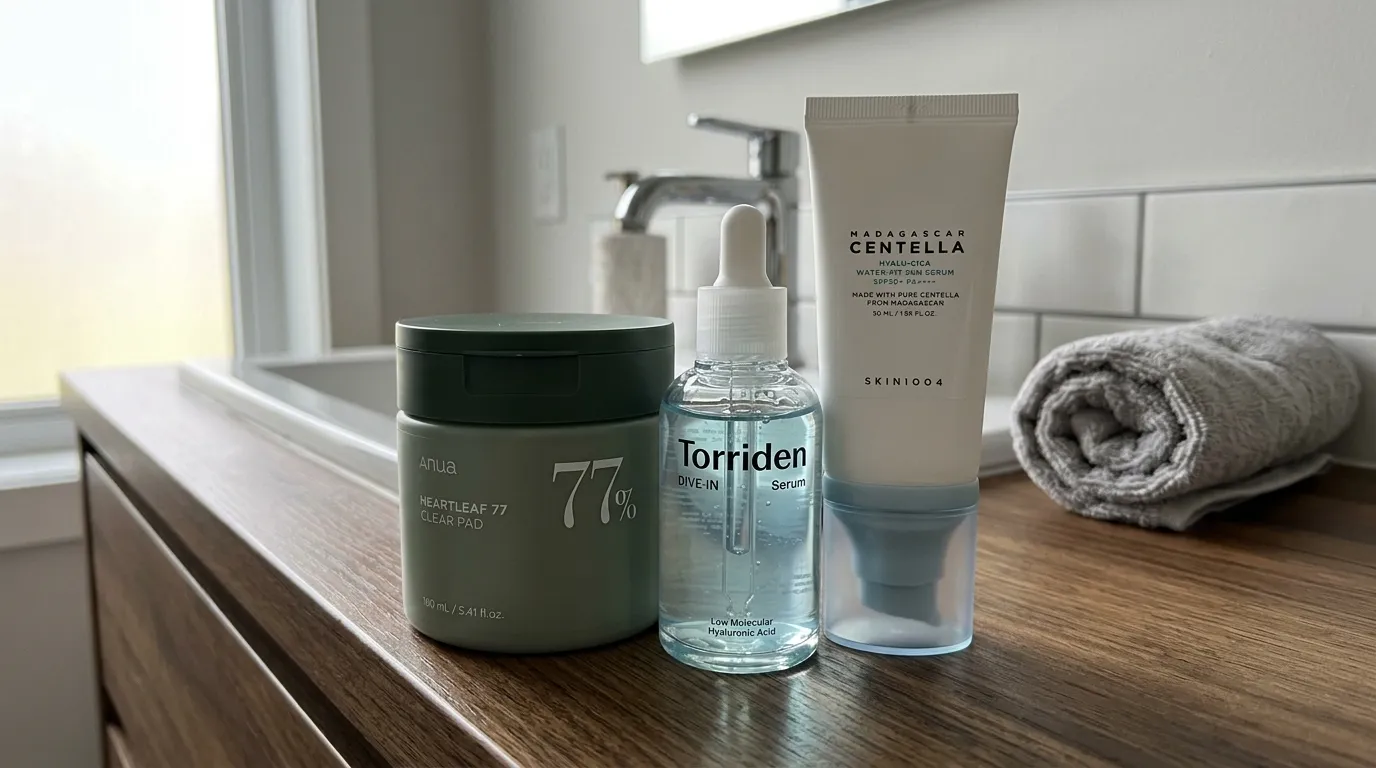
If you want specific starting points, the two below are long-running bestsellers we keep recommending — one cleanser, one sunscreen. (The toner and moisturizer categories depend much more on your skin type, so we cover those in their own guides.)
Both product cards below include multiple places to buy — see our guide to K-beauty retailers for how they compare on shipping and pricing.
Common beginner mistakes
- Judging products in three days. One skin cycle is about a month. Give things time, unless you’re reacting badly — then stop immediately.
- Skipping sunscreen on cloudy days. UVA doesn’t care about clouds, and it’s the main driver of visible skin aging.
- Buying a full routine from one viral video. Your skin is not the influencer’s skin. Build slowly, based on how your face responds.
- Hot water. It feels great and your barrier hates it. Lukewarm, always.
- More products = more results. The opposite is usually true for beginners.
The bottom line
Start with four products: a low-pH cleanser, a hydrating toner if you want it, a moisturizer that fits your skin type, and a sunscreen you genuinely like wearing. Do it every day for six weeks before adding anything. That consistency — not a bathroom shelf full of bottles — is the actual “secret” of Korean skincare.
Ready for the next step? Read our reviews of individual products in the Reviews section, or learn what all those ingredient names mean in Ingredients A–Z.