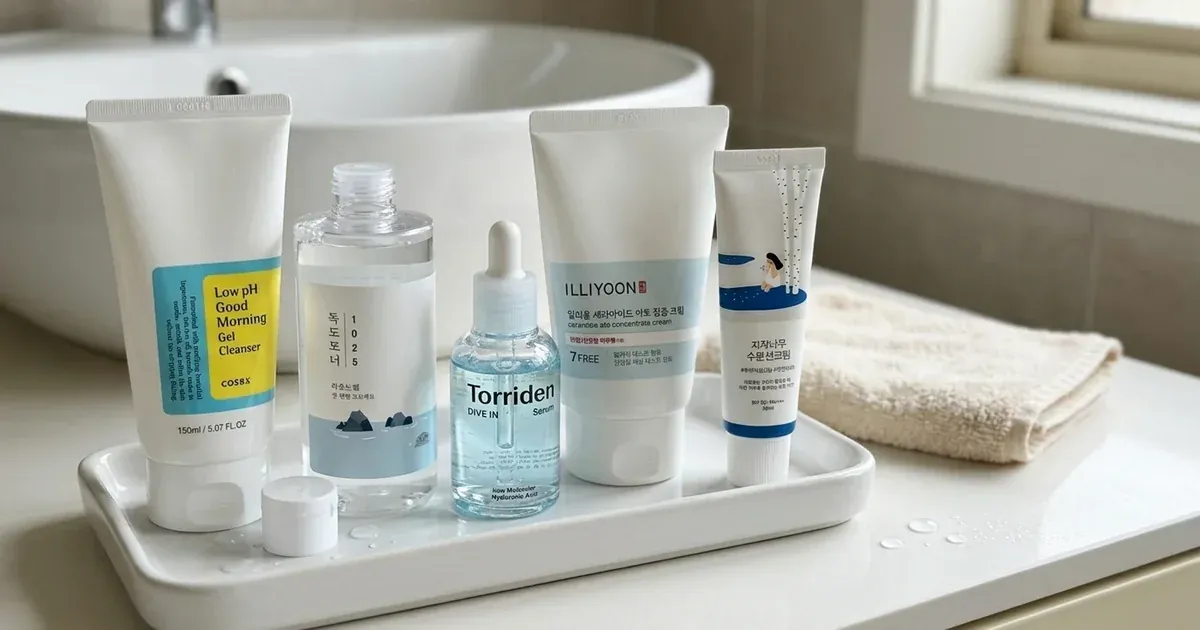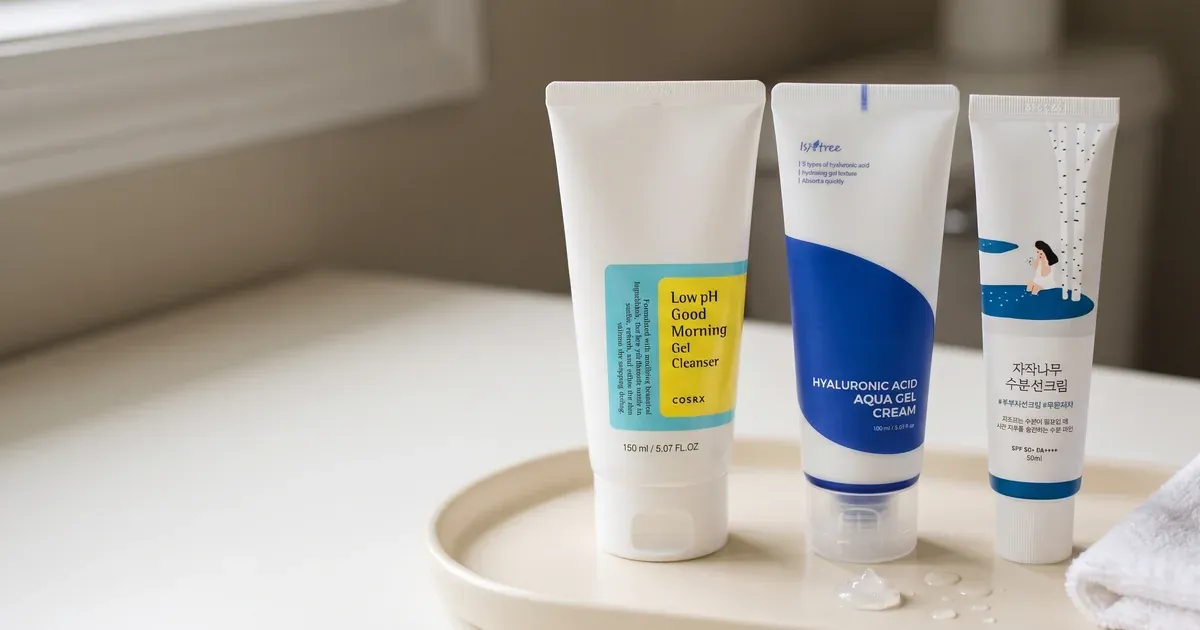
Some products pictured on this page are shown for illustration only and aren’t covered in this article.
The Korean skincare routine is famous for its length: cleanser after cleanser, toner, essence, serum, cream. If your skin is oily and breaks out easily, that can sound less like self-care and more like a recipe for clogged pores. The good news is that the best parts of K-beauty, gentle formulas and well-chosen ingredients, travel well. The step count is what you can leave behind.
Below: why fewer steps make sense for oily, acne-prone skin, a simple morning and evening routine, the K-beauty ingredients worth looking for, and how long to give it before you judge.
This guide is put together from the AAD and published research, with each point linked to its source. It is general information, not a treatment plan, and we haven’t tested this routine on our own skin for this piece (how we review).
Why fewer steps work better here
Oil is not the enemy. The AAD points out that oil helps preserve the skin, and that people with oily skin tend to have thicker skin and fewer wrinkles. The aim is balance: less excess oil, without stripping the skin’s natural moisture.
Stripping backfires. When your skin becomes dry, the AAD explains, your body makes more oil, and that extra oil can clog pores and lead to more breakouts. It is also blunt about the urge to scrub acne into submission: don’t apply astringents and acne treatments until your face feels dry, because dry skin is irritated skin, and irritation risks more acne.
That is where a classic K-beauty routine and acne advice part ways. For skin with acne, the AAD recommends gentle, alcohol-free products and suggests avoiding astringents, toners and exfoliants, which can dry the skin and make acne look worse. Toner is one of the most familiar Korean steps, so this is worth saying plainly. If you keep a toner, make it a hydrating, alcohol-free one, and drop it if it stings.
Long routines have their place; our glass skin routine shows one built for a different goal. For oily, breakout-prone skin, three steps in the morning and three at night are plenty.
The morning routine
First, cleanse. The AAD advises washing your face once in the morning and once at night, plus after sweating heavily. Use a gentle, non-abrasive cleanser without alcohol, apply it with your fingertips on skin wet with lukewarm water, rinse, and pat dry with a soft towel. Washcloths and sponges can irritate the skin.
Then moisturize, lightly. A dermatologist quoted by the AAD suggests that oily skin can opt for a gel, which is lighter than other types of moisturizer. Korean gel creams and watery emulsions fit this step well.
Finish with sunscreen. For acne-prone skin, the AAD recommends a broad-spectrum, water-resistant sunscreen with SPF 30 or higher on all exposed skin when you are outdoors, labeled “non-comedogenic” or “won’t clog pores.” On its oily skin page, it adds that sunscreens containing zinc oxide and titanium dioxide are a good choice to prevent breakouts, and that sunscreens with fragrance or oils are best avoided. The same page suggests choosing skincare labeled “oil free” and “noncomedogenic.”
That is the whole morning. Our morning vs evening routine guide explains why the two halves of the day do different jobs.
The evening routine
First, cleanse. The AAD recommends a gentle, foaming face wash for oily skin, and warns that a wash that is too harsh can irritate the skin and trigger more oil.
A note on double cleansing, the K-beauty habit of an oil cleanser followed by a water-based one. The same AAD oily skin page advises against oil-based or alcohol-based cleansers because they can irritate the skin. If you wear water-resistant sunscreen or makeup and want to try an oil cleanser anyway, introduce it on its own, watch your skin, and drop it if breakouts increase. Our guide to how to double cleanse covers the technique.
Next, treat. This is where an acne treatment goes, if you use one. The AAD names common ones, such as benzoyl peroxide, salicylic acid, adapalene and tretinoin, and notes that they tend to dry and irritate the skin. Pick one and use it consistently rather than stacking several.
Last, moisturize. The AAD says using a moisturizer every day can help your skin tolerate those treatments. It also suggests leaving some water on your skin after washing, then applying moisturizer.
K-beauty ingredients worth looking for
Korean formulas make it easy to find ingredients that suit oily skin in light, gentle textures. Three are worth knowing.
Niacinamide. In a trial by Draelos and colleagues, 100 people took part in a double-blind comparison: 50 applied a 2% niacinamide moisturizer to the face for 4 weeks and 50 used a placebo moisturizer. The niacinamide group’s rate of oil production dropped significantly after 2 and 4 weeks. In a second group of 30 people who used it on half the face for 6 weeks, the amount of oil on the skin’s surface fell significantly, though the rate of oil production did not. Promising, but not a guarantee. Our niacinamide guide covers the rest of what it does.
Centella. Centella asiatica, also known as cica or tiger grass, is a medicinal herb that turns up in many Korean soothing products. In a study where redness was induced on test areas of skin, every cosmetic with centella extract reduced redness compared with the control area and the placebo. Our centella guide goes further.
Salicylic acid. Common in Korean BHA toners and pads. The AAD says salicylic, glycolic and lactic acids can help reduce oiliness but may be too harsh for some skin. Stop, or use it less often, if your skin becomes irritated.
Give it time, and know when to get help
Test before you commit. The AAD suggests applying a new product to a test spot twice daily for seven to 10 days. If there is no reaction such as red, itchy or swollen skin by then, go ahead and use it.
Then give it time. Switching acne products every week can irritate the skin. The AAD recommends using a product for 6 to 8 weeks to see some improvement, and notes that complete clearing generally takes 3 to 4 months.
Hands off in the meantime. Picking, popping or squeezing acne makes it take longer to clear and raises the risk of scarring and dark spots, according to the AAD.
And know when a routine is not enough. The AAD says deep or painful acne needs a dermatologist, and some people need prescription-strength treatment.
FAQ
Is a multi-step Korean routine good for oily, acne-prone skin? Not by default. The AAD advises people treating acne to use gentle, alcohol-free products and to avoid astringents, toners and exfoliants that can dry the skin and make acne look worse. A short routine with fewer, gentler steps is the safer way to borrow from K-beauty.
Do oily skin types need a moisturizer? Usually, yes. The AAD explains that when skin becomes dry, the body makes more oil, which can clog pores and lead to more breakouts. A lightweight gel is an option for oily skin, and a daily moisturizer helps skin tolerate drying acne treatments.
Should I double cleanse if I have oily skin? Be cautious. On its oily-skin page, the AAD advises against oil-based or alcohol-based cleansers because they can irritate skin, and recommends a gentle, foaming face wash. If you wear sunscreen or makeup and want to try an oil cleanser, test it first and drop it if you break out.
Which Korean skincare ingredients suit oily, acne-prone skin? Niacinamide lowered the rate of oil production in a trial by Draelos and colleagues, and centella reduced redness in a lab-induced redness test. The AAD notes that salicylic acid can help reduce oiliness but may be too harsh for some skin.
How long until I see a difference? The AAD says to use an acne product for 6 to 8 weeks to see some improvement, and that complete clearing generally takes 3 to 4 months. Deep or painful acne needs a dermatologist.
The bottom line
For oily, acne-prone skin, borrow K-beauty’s gentleness and its ingredients, not its step count. Cleanse softly, moisturize lightly, wear sunscreen every morning, use one acne treatment at night, and give it time before you change anything. If your acne is deep or painful, a dermatologist will get you further than any routine.