Korean skincare has a language problem — in the best way. Snail mucin. Salmon DNA. Heartleaf. Mugwort. Cica. Reading a K-beauty label can feel like browsing a fantasy apothecary, and marketing doesn’t always help you separate the genuinely useful from the merely poetic.
This guide is your decoder ring. Below, we explain the K-beauty ingredients you’ll actually encounter in 2026 — what each one is, what it’s designed to do, who it suits, and which trends deserve your attention versus your skepticism. It’s written to be the page you bookmark and return to every time a product listing makes you go “wait, what is that?”
One framing note before we start: no cosmetic ingredient treats or cures any skin condition, no matter how enthusiastic the marketing. What good ingredients can do is hydrate, soothe, protect, and help skin look and feel its best. That’s the honest lens we’ll use throughout.
How to read this guide (and any K-beauty label)
K-beauty ingredients cluster into four jobs. Almost everything below fits one:
- Hydrators — pull water into skin and hold it there
- Soothers — calm skin that looks red, stressed, or reactive
- Barrier supporters — help maintain the skin’s own protective layer
- Tone & texture helpers — support a brighter, smoother-looking complexion over time
A well-built routine usually covers all four. Now, the cast of characters.
The hydrators
Snail mucin — the icon
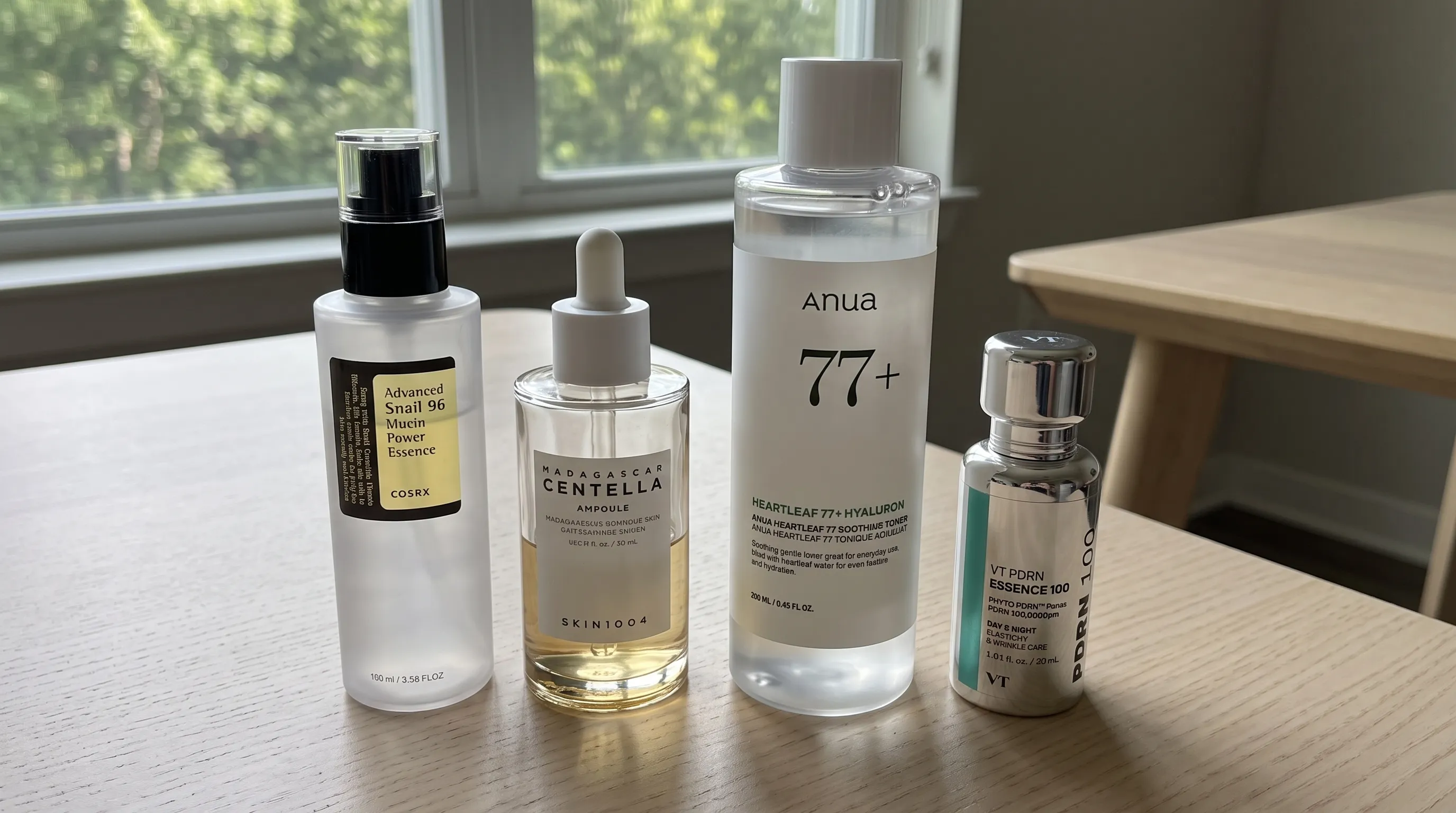
The ingredient that launched a thousand double-takes. Snail secretion filtrate is a humectant-rich ingredient prized for the bouncy, “glazed” hydration it gives — that signature glass-skin slip. It’s been a K-beauty staple for over a decade, which in trend-driven beauty is basically tenure. Best for: dehydrated, dull, or texture-obsessed skin. (Yes, collection is designed to be cruelty-free by reputable brands; and no, it doesn’t smell like anything.)
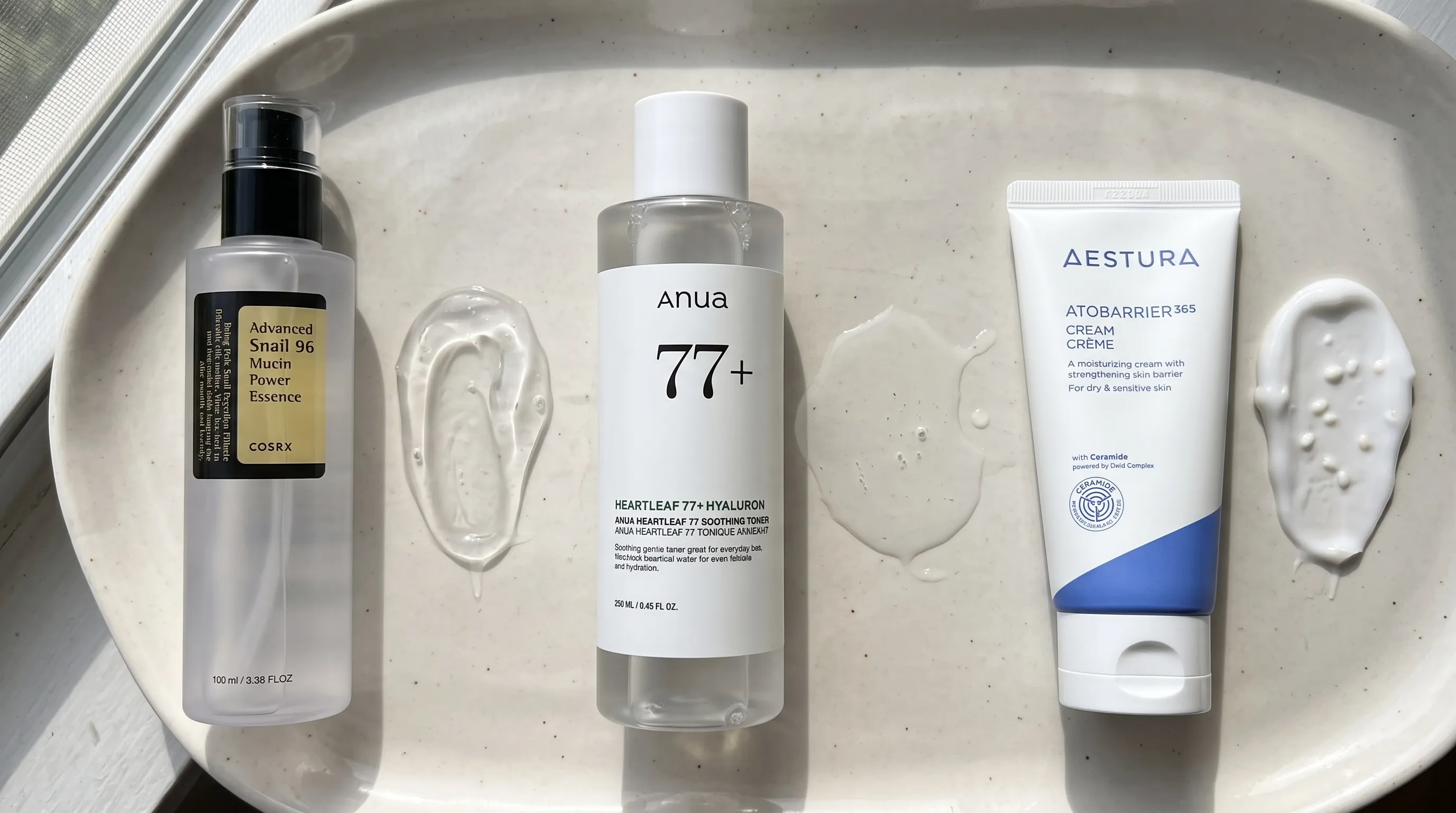
I used to be a complete skeptic about the snail mucin hype — until a rough patch left my face tight and flaky. Stripping my routine down to just a basic cleanser and the COSRX snail essence completely changed my skin’s baseline. It didn’t instantly cure anything overnight, but that signature gooey hydration provided a comforting, heavy-duty moisture layer that finally allowed my skin to settle down and retain its bounce.
Hyaluronic acid — the workhorse
Not uniquely Korean, but K-beauty formulates it beautifully, often layering multiple molecular weights in one watery essence. It’s the “drink of water” ingredient in nearly every hydrating product you’ll buy.
Beta-glucan — the quiet overachiever
A soothing hydrator derived from oats or mushrooms that K-beauty uses where Western brands would default to hyaluronic acid. Gentle enough for nearly everyone; a name worth spotting on labels for sensitive skin.
The soothers
Centella asiatica (cica) — the comfort blanket
If K-beauty had a national ingredient, cica would be on the ballot. Extracts of the centella plant (and derivatives like madecassoside) anchor the entire “calming” category — those green-packaged creams for skin that’s feeling irritated, post-sun, or just dramatic. We’re publishing a full centella deep-dive soon.
Heartleaf (houttuynia cordata) — cica’s trendy cousin
The soothing star of the past few years, beloved in toners and pads for oily, congestion-prone skin that also runs sensitive. If “77% heartleaf extract” sounds familiar, you’ve already met it.
Mugwort (artemisia) — the traditional pick
A soothing botanical with deep roots in Korean tradition, typically found in essences for stressed, reactive skin. Choosing between mugwort, heartleaf, and cica is mostly texture and brand preference — they play the same position.
The barrier supporters
Ceramides — the mortar in your skin’s brick wall
Ceramides are lipids naturally present in skin; in skincare, they help support and maintain the skin barrier — the outer layer that keeps moisture in and irritants out. K-beauty’s 2026 twist is the capsule cream format (little ceramide-rich beads that burst as you apply). Trend or triumph? Our capsule-cream explainer is coming soon.
Panthenol (pro-vitamin B5) — the supporting actor
Rarely the headline, always in the credits. A humectant-soother hybrid that makes barrier creams feel comforting. Seeing it high on an ingredient list is a quiet green flag.
The tone & texture helpers
Niacinamide — the resume ingredient
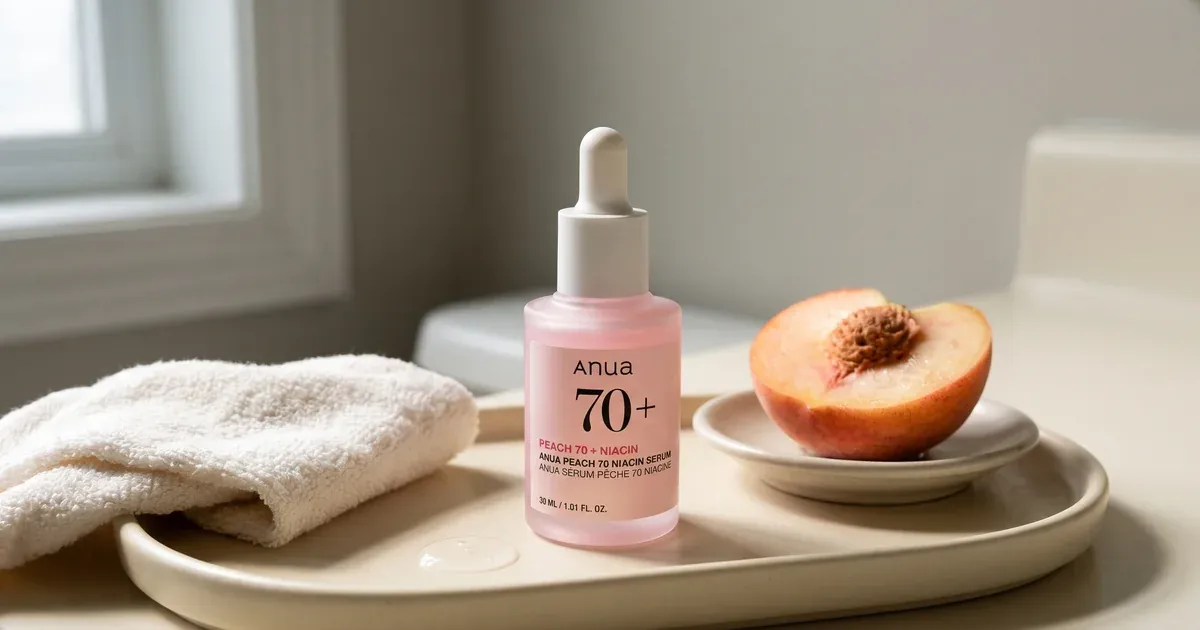
Vitamin B3, and probably the most-studied ingredient in this guide. In K-beauty it appears everywhere from toners to sunscreens, used to support brighter-looking, more even-toned skin over time. It’s famously well-tolerated and layers with almost anything. For the hype-free deep dive — real benefits, limits, and how K-beauty formulates it — read Niacinamide 101: What It Actually Does.
Rice & fermented extracts — the heritage brighteners
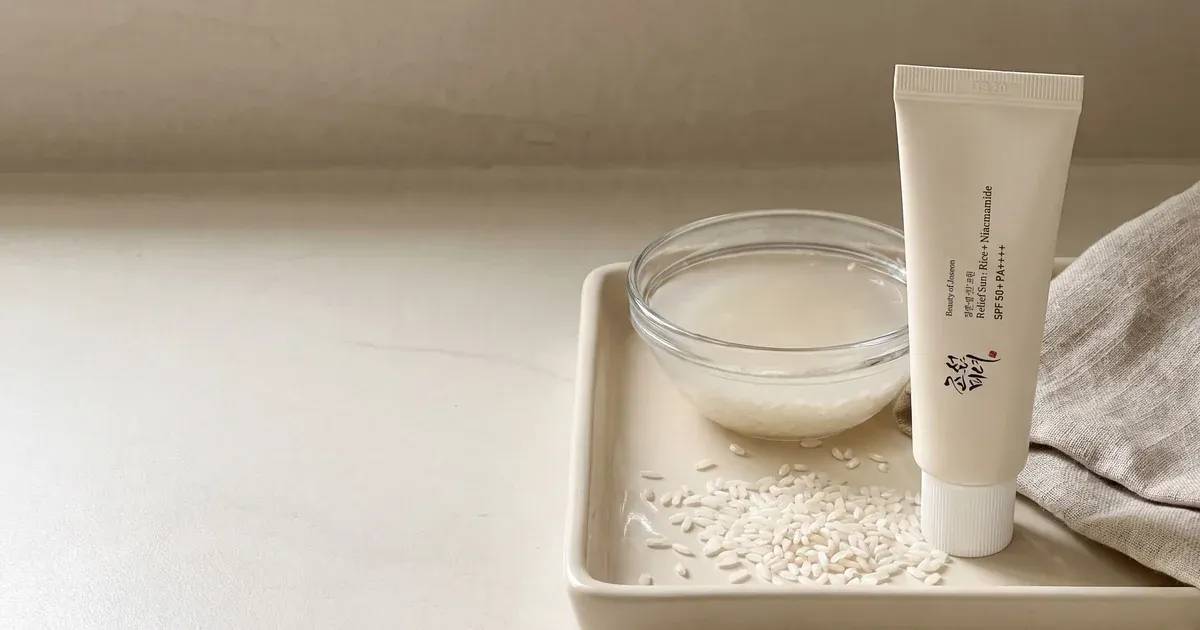
Rice water, galactomyces, bifida ferment — K-beauty’s fermentation family, used for the soft-focus glow associated with “yeast” essences. Gentler and more gradual than Western-style acids; think marathon, not sprint.
The 2026 trend watch
PDRN (salmon DNA) — the moment
The ingredient of the year, full stop. PDRN is a DNA-derived ingredient (usually from salmon) starring in hydrating, skin-comforting serums — with a medical-adjacent backstory that fuels both the hype and the confusion. The two-minute version: topical PDRN is a cosmetic hydrator, not a clinic procedure in a bottle. The ten-minute version, including what it can and can’t do: What Is PDRN in Skincare?
Exosomes & “biotech” actives — approach with curiosity, buy with skepticism
The frontier of K-beauty marketing in 2026 is biotech language — exosomes, peptide complexes, microbiome claims. Some of it will mature into genuinely useful categories; much of it is early. Our rule: never buy a frontier ingredient at a premium until independent testing catches up. When we test these categories ourselves, you’ll read it in our reviews first.
Reading a K-beauty label like an editor
Three habits that will serve you forever:
- Position matters. Ingredients are listed in descending order (until the ~1% line). A “centella toner” with centella listed 15th is a marketing toner.
- Percent claims need context. “77% extract” sounds impressive, but extracts are mostly water — it’s a signal of focus, not a potency guarantee.
- Fewer heroes, better products. A formula built around 1–2 stars with good supporting ingredients usually beats a “kitchen sink” formula with 12 headliners at trace amounts.
Keep decoding
Ingredients are half the story; using them in the right order is the other half. Pair this guide with our Korean Skincare Routine for Beginners to put your new vocabulary to work — and check back here as we publish deep-dives on every ingredient above.