Capsule creams are everywhere right now: jars and tubes with tiny beads suspended in the cream, often sold on the promise of ceramides that reach the skin barrier and stay there. It is a striking format. The more useful question is what the capsules actually do, and whether a capsule cream is any better than a plain ceramide moisturizer.
Below: what ceramides are and why skin needs them, what encapsulation is designed to do, why the format has taken off, what the research does not settle yet, and how to use a ceramide cream well.
This guide is put together from Cleveland Clinic, a published research review on encapsulated cosmetic ingredients, and a brand’s own page, with each point linked to its source. We haven’t tested a capsule cream on our own skin for this piece (how we review).
What ceramides are, and why skin needs them
Ceramides are fats, or lipids, that make up about 50% of your epidermis, the outer layer of your skin, according to Cleveland Clinic. Dermatologist Amy Kassouf explains that they help keep out harmful elements like toxins and allergens, and that they help lock in moisture to keep skin soft and plump.
They don’t work alone. A research review by Lens lists the lipids in the stratum corneum, the very top layer of skin, as 50% ceramides, 28% cholesterol, 17% free fatty acids and 5% cholesteryl sulphate. That mix is the “mortar” that holds the barrier together.
Supply changes over time. Cleveland Clinic notes that as you age, your skin can’t replenish its natural ceramides as quickly, which is why synthetic ceramides are added to moisturizers, serums and other products. Dr. Kassouf adds that aging and certain skin conditions, like eczema, involve decreased ceramide levels, which can leave skin dehydrated or itchy, and that using products with added ceramides can restore optimal levels of these lipids.
What the capsules in a capsule cream are meant to do
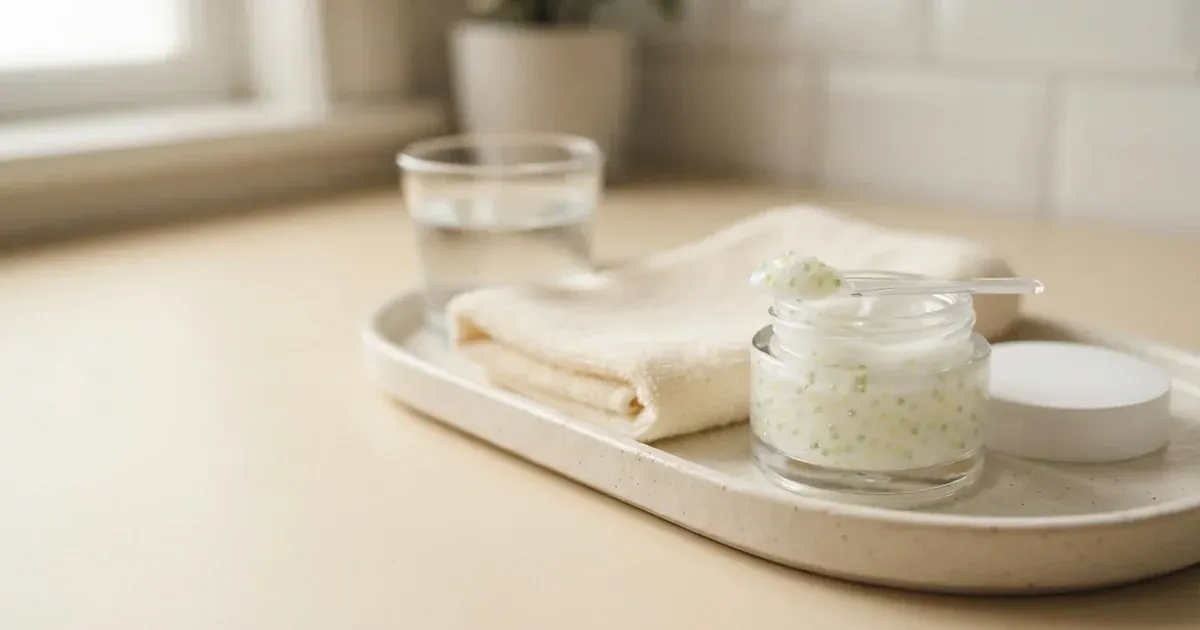
In a capsule cream, some ingredients are wrapped inside tiny carriers instead of being mixed straight into the cream. Formulators have a few reasons for doing this.
According to the Lens review, cosmetic actives have been encapsulated into liposomes, small fat-based bubbles, to enhance their stability and delivery to the skin and so improve how well the formula works. The same review says phospholipid-based carriers can help actives pass into the skin, improve their solubility and stability, and release them in a controlled, sustained way.
Keep in mind what that is: a description of why the technique is used across cosmetics in general. It is not evidence that any particular capsule cream on the shelf does these things better than a well-made cream without capsules.
Why the format is trending
Part of the appeal is simple: shoppers want proof. The Lens review notes that modern consumers are increasingly concerned about the performance and clinical efficacy of cosmetic formulas, and a visible capsule is an easy way for a brand to signal that there is technology inside.
The best-known example is Aestura’s Atobarrier cream. On its own site, Aestura calls it a capsule hydration cream with a formula optimized for sensitive skin, made with high-density ceramide capsules. The brand says it combines long-chain ceramide, meant to make up for shortened ceramide chains, with linker ceramide that acts as a connector, and that the capsule technology is there to help it stay between the layers of the skin barrier. Those are the brand’s claims. Aestura also says the cream has won the cream category of the Olive Young Awards for five consecutive years, ranking first in 2024.
Capsules have spread beyond creams too. We compared that Aestura cream with a cheaper ceramide rival in our barrier cream comparison, and covered a capsule serum in our hyaluronic acid capsule serum review.
What the research does not settle
Getting ingredients into the skin is hard, capsule or not. The Lens review names poor delivery of active ingredients through the skin as one of the main disadvantages of cosmeceutical products. It also lists the drawbacks of liposomes themselves: high production cost, leakage of the encapsulated ingredient, and vulnerability to oxidation and hydrolysis.
While putting this guide together, we didn’t find independent research comparing a ceramide capsule cream directly against a regular ceramide cream. So what you can say with confidence is narrower than the marketing: ceramides are a real part of the barrier, encapsulation has real technical reasons behind it, and whether a given capsule cream does more for your skin than a plain one is not settled.
A cream also can’t fix everything. Cleveland Clinic lists signs of a damaged barrier, including dry or flaky skin, inflammation and irritation, itching, rough patches, and stinging when you apply products. If the damage comes from an underlying skin condition, Cleveland Clinic advises working with a dermatologist.
How to read the label
The word “capsule” on the box tells you how something is packaged, not which ceramides are inside. The ingredient list does that.
Cleveland Clinic points out that many products advertise ceramides front and center, and that you can also check the ingredient label. There are 12 types of ceramides, but the three most common in over-the-counter serums, moisturizers, lotions, toners and creams are:
- Ceramide 1, or ceramide EOS
- Ceramide 3, or ceramide NP
- Ceramide 6-II, or ceramide AP
On its skin barrier page, Cleveland Clinic also suggests looking for products that include ceramides, fatty acids and lipids, which naturally make up a large share of the barrier.
How to use a ceramide cream well
A ceramide cream does its job as a moisturizer, so it helps to pair it well. Cleveland Clinic says ceramides work well with emollients, which form a film on the skin and help relieve dryness and itchiness; humectants, which draw in moisture by binding water to the skin; and occlusives. Specific ingredients it suggests looking for are dimethicone, colloidal oatmeal, glycerin, hyaluronic acid and shea butter.
Timing matters too. Dr. Kassouf says moisturizing products are best absorbed onto damp skin, and advises applying moisturizer within three minutes of showering or washing your face.
If your skin is already stinging or flaky, our skin barrier reset routine walks through how to pare a routine back while the barrier recovers.
FAQ
What are ceramides? Ceramides are fats, or lipids, that make up about 50% of the epidermis, the outer layer of your skin. Cleveland Clinic dermatologist Amy Kassouf says they help keep out harmful elements like toxins and allergens, and they help lock in moisture.
What is a capsule cream? It is a cream where some ingredients are wrapped in tiny capsules instead of being mixed straight into the base. Aestura, for example, describes its Atobarrier cream as a capsule hydration cream made with high-density ceramide capsules.
Do capsules make ceramides work better? Not proven in a head-to-head way. A research review by Lens says encapsulation is used to improve the stability and delivery of cosmetic actives, but also that poor delivery through the skin remains one of the main disadvantages of these products. Brand claims about capsules are the brand’s own claims.
Why are capsule creams trending? The Lens review notes that shoppers are increasingly concerned about how well cosmetic formulas actually perform, and capsules are a visible way for brands to answer that. Aestura says its capsule cream has won the cream category of the Olive Young Awards for five consecutive years.
How should I use a ceramide cream? Dr. Kassouf advises applying moisturizer to damp skin within three minutes of showering or washing your face. Cleveland Clinic adds that ceramides work well alongside humectants such as glycerin and hyaluronic acid.
The bottom line
Ceramides are a genuine, central part of your skin barrier, and a cream that supplies them is a sensible choice for dry or easily irritated skin. Capsules are a packaging technique with real reasons behind it, but they have not yet been shown to beat a good ceramide cream without them. Choose by the ingredient list and a texture you will actually use every day, apply it to damp skin, and see a dermatologist if your skin stays irritated.