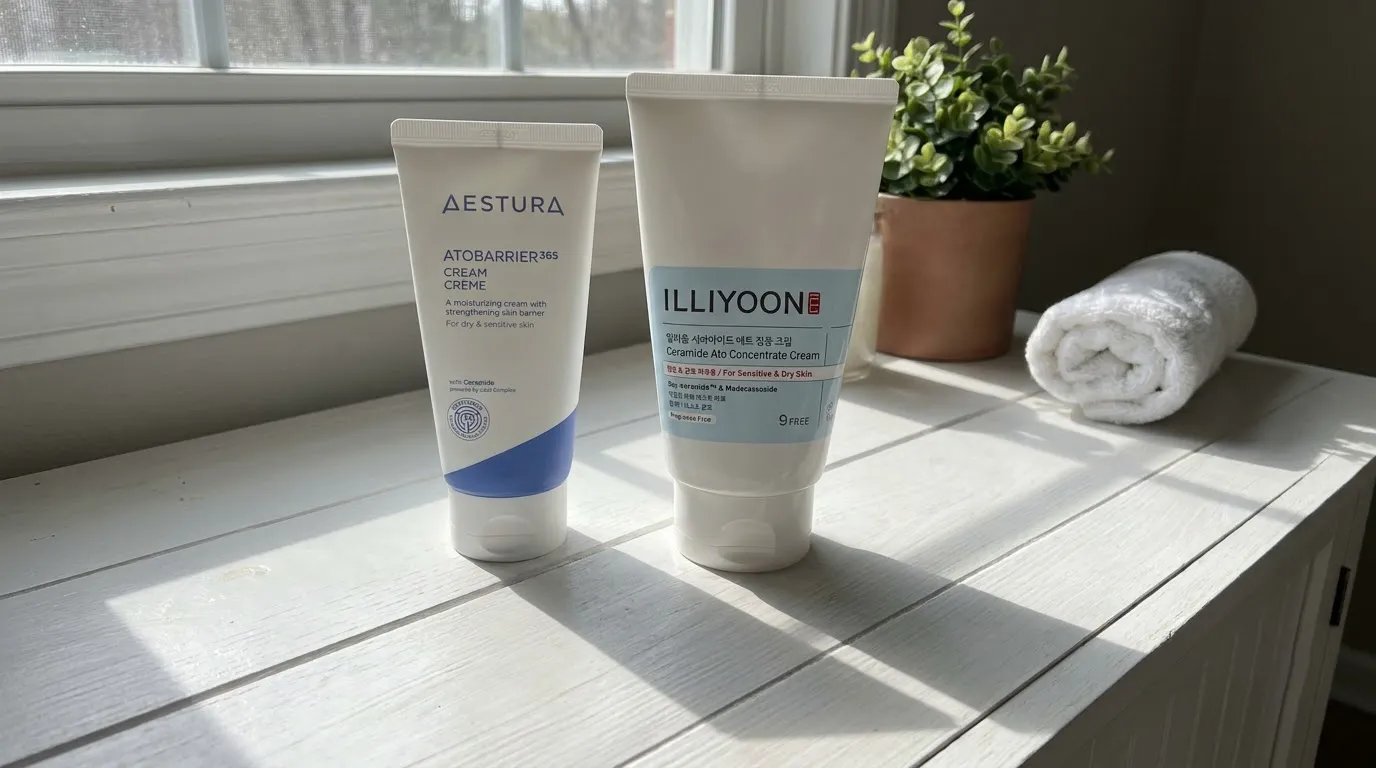
Aestura’s Atobarrier 365 Cream is the ceramide cream K-beauty shoppers recommend when skin feels tight and reactive. Illiyoon’s Ceramide Ato Concentrate Cream sits next to it on the same shelves for a fraction of the price. Both come from the Amorepacific group, both are built around ceramides, and the question this comparison answers is simple: what does the extra money buy?
It’s put together from both Olive Young Global listings (ingredient lists, directions, buyer ratings and prices), Aestura’s own product page and Cleveland Clinic’s dermatology guides, with each point linked to its source. We haven’t tested these creams on our own skin for this piece (how we review).
Both are cosmetics designed to help support the skin’s moisture barrier. Neither treats a skin condition. If your skin stays irritated, flaky or painful, see a dermatologist.
This comparison contains paid links. The Dew Journal earns a commission on purchases, at no cost to you.
The short answer
| Aestura Atobarrier 365 | Illiyoon Ceramide Ato Concentrate | |
|---|---|---|
| Size | 80 ml tube | 150 ml tube |
| Price at our last look (Olive Young, delivery to Germany) | €37.62 | €10.03 |
| Buyer rating on Olive Young Global | 4.9 / 5 (2,782 global reviews) | 4.8 / 5 (825 global reviews) |
| Directions | Morning and evening, face | Generously on dry areas, face and body |
| Shelf life | 36 months, 1 year after opening | 36 months, 12 months after opening |
Both prices were sale prices on 11 November 2026, so check before you buy.
Pick Aestura if you want one cream for morning and evening that leaves a light, non-sticky finish, and the price doesn’t bother you. Pick Illiyoon if you want a large tube of mild ceramide cream for dry patches anywhere on the body. The ingredient lists overlap more than the price gap suggests.
What a barrier cream is for
Cleveland Clinic describes the skin barrier as the outermost layer of skin: it keeps water in and keeps irritating chemicals and bacteria out. Its lipids are ceramides, cholesterol and fatty acids, and the clinic’s advice for a damaged barrier is to choose a moisturizer containing ceramides, fatty acids and lipids.
Ceramides alone make up about 50% of the outer layer of skin, according to Cleveland Clinic’s ceramide guide, and they help lock in moisture. Both creams here follow that recipe. Our skin barrier reset routine covers the rest of the routine around them.
Aestura Atobarrier 365 Cream
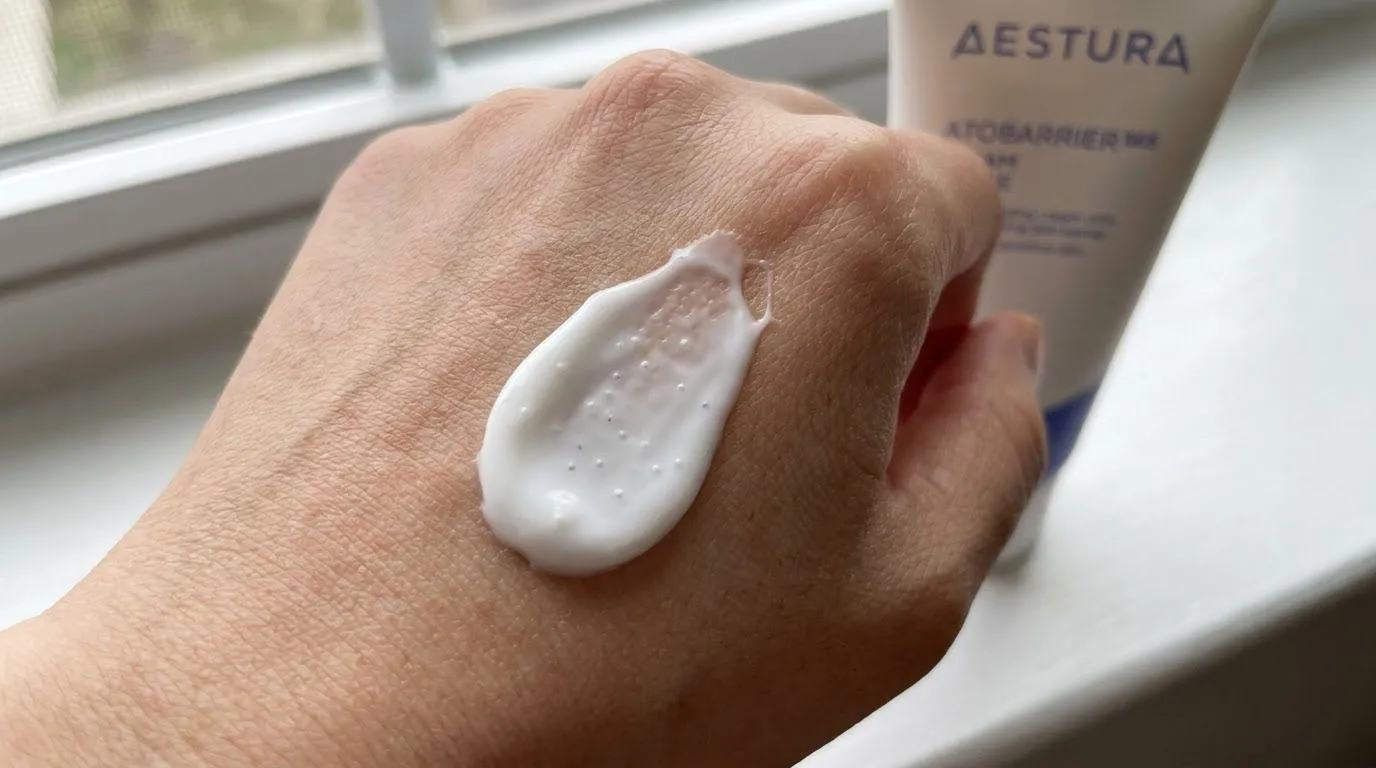
Aestura calls Atobarrier 365 a capsule hydration cream for sensitive skin, using high-density ceramide capsules. The brand describes two kinds of ceramide: “long-chain” ceramides to make up for shortened chains in sensitive skin, and “linker” ceramides that act as connectors. It also says the cream won the cream category at the Olive Young Awards five years in a row, ranking first in 2024.
What’s in it. The Olive Young Global listing includes squalane, dimethicone, stearic and palmitic acids, cholesterol, niacinamide, ceramide NP and phytosphingosine. The listing also says it has no artificial fragrance and no synthetic color. In the photo above, the capsules show as tiny beads in the white cream.
How to use it. Apply an appropriate amount morning and evening and pat lightly until absorbed. Olive Young describes it as gliding on smoothly and leaving a moisturizing coat on the skin without stickiness.
What buyers say. The 80 ml tube scores 4.9 out of 5 from 2,782 global reviews on Olive Young Global, with 91% of them five stars.
Illiyoon Ceramide Ato Concentrate Cream
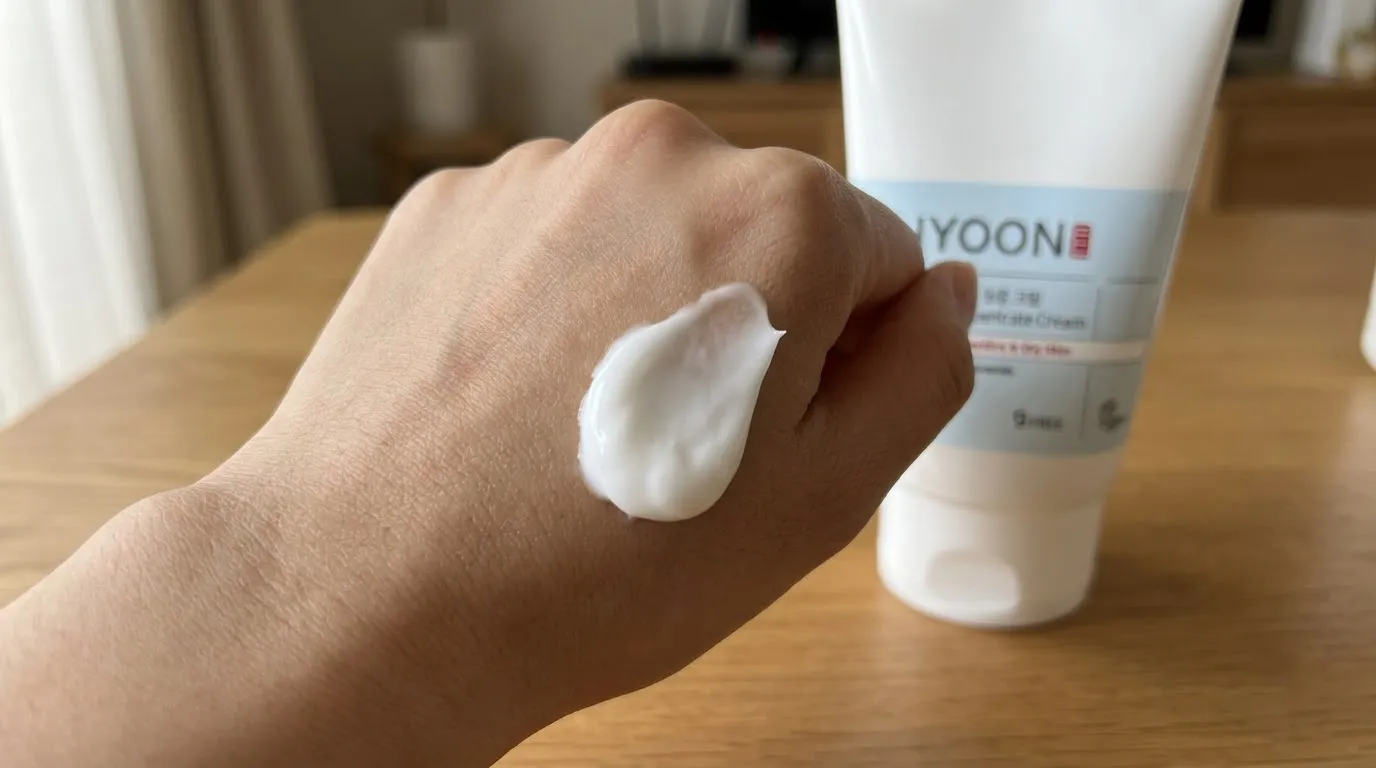
Olive Young describes Illiyoon’s cream as a mild cream for sensitive skin, for face and body. The listing names three key ingredients: plant-derived (phyto) ceramide, a patented ceramide complex with twice as many capsules as the previous version, and soybean (soja) extract.
What’s in it. The full list includes dimethicone, stearic and palmitic acids, hydroxypropyl bispalmitamide MEA (listed as Ceramide PC-104), cholesterol, soybean oil, ceramide NP, phytosphingosine and ginseng root water. Skip it if you have a soy allergy.
How to use it. Apply a generous amount to dry areas, on the face or body, as often as needed to relieve dryness.
What buyers say. The 150 ml tube scores 4.8 out of 5 from 825 global reviews on Olive Young Global, with 90% of them five stars.
Head to head: where the money goes
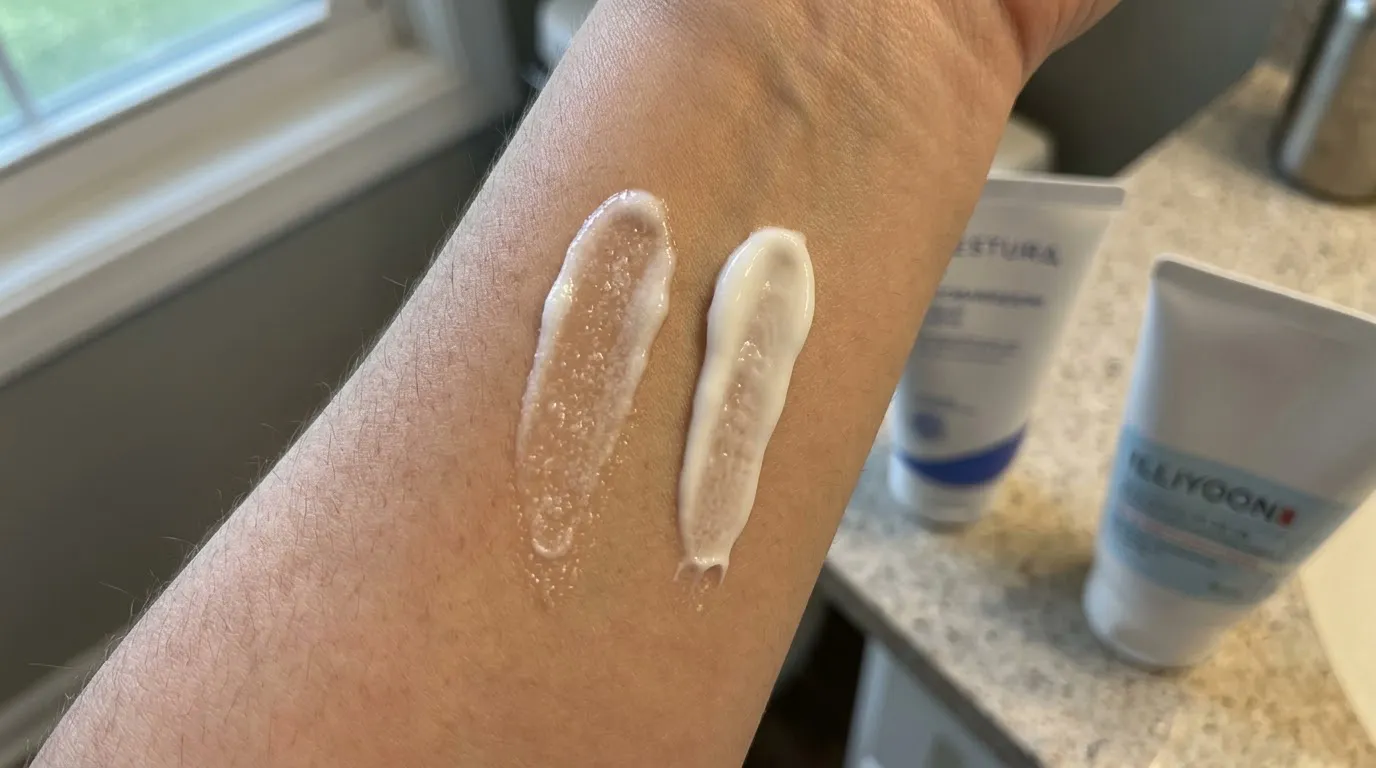
The ingredients overlap. Both lists share the lipid trio Cleveland Clinic names (ceramide NP, cholesterol, stearic and palmitic acids) plus dimethicone, phytosphingosine and the same ceramide-like ingredient, hydroxypropyl bispalmitamide MEA. Aestura adds squalane and niacinamide and leans on its capsule technology; Illiyoon adds soybean oil and plant extracts.
The directions differ. Aestura is written as a twice-daily face cream. Illiyoon is written as a cream to apply generously to dry areas, face and body, as often as needed. That’s the clearest guide to which one fits your routine.
The price gap is large. At our last look, Aestura cost €37.62 for 80 ml and Illiyoon €10.03 for 150 ml. You get nearly twice as much Illiyoon for about a quarter of the price.
Buyers like both. 4.9 and 4.8 out of 5 are both strong scores. Ratings measure satisfaction, though, not what a cream does to your skin over months.
Who should buy which
Aestura Atobarrier 365 makes sense if:
- You want one ceramide cream for morning and evening on the face
- You prefer a lighter, non-sticky finish
- The price fits your budget
Illiyoon Ceramide Ato Concentrate Cream makes sense if:
- You want a big tube for dry patches on the face and body
- You’re on a budget
- You don’t have a soy allergy
Neither, if: your skin feels fine. A barrier cream is for skin that feels tight or reactive, not an upgrade everyone needs. And give whichever you pick time: Cleveland Clinic says it usually takes three or four months to start seeing results when you’re repairing a damaged barrier.
Where to buy them
The Olive Young links are paid links. The Dew Journal earns a commission on purchases, at no cost to you.
- Olive Young Global sells Aestura Atobarrier 365 and Illiyoon Ceramide Ato Concentrate Cream. For EU addresses, it lists delivery in 8 to 11 days by UPS, with free shipping from US$60. Its prices and shipping don’t include tax; for the EU, the tax is charged at checkout and depends on the destination country.
- YesStyle lists Aestura Atobarrier 365 and Illiyoon Ceramide Ato Concentrate Cream. For EU orders, YesStyle says prices already include VAT. It doesn’t accept returns of opened cosmetics, so patch test before you rely on it.
Prices move with sales, so compare before you check out.
FAQ
Is Aestura Atobarrier 365 worth the price? Buyers rate it very highly: 4.9 out of 5 from 2,782 global reviews on Olive Young Global. But Illiyoon’s cream shares much of the same barrier-lipid backbone (ceramide NP, cholesterol, fatty acids) and cost about a quarter as much at our last look. Pay more for Aestura if you want a lighter cream to wear morning and evening.
What does a barrier cream do? Cleveland Clinic describes the skin barrier as the outer layer that keeps water in and irritants out, held together by lipids: ceramides, cholesterol and fatty acids. A barrier cream supplies those lipids to help skin hold on to moisture. It’s a cosmetic support role, not a treatment.
Can barrier creams treat eczema or atopic skin? No. Products with “ato” in the name are still cosmetics. Cleveland Clinic advises working with a dermatologist if your barrier is damaged by an underlying skin condition.
Can you use Illiyoon Ceramide Ato Concentrate Cream on your body? Yes. Olive Young’s listing says it’s for face and body, applied generously to dry areas as often as needed. The 150 ml tube makes that practical.
How long do these creams last once opened? Olive Young lists both with a 36-month shelf life: 1 year after opening for Aestura, and within 12 months of opening for Illiyoon.
Final thoughts
Aestura Atobarrier 365 is the polished, twice-daily face cream; Illiyoon Ceramide Ato Concentrate Cream is the big, budget tube for dry skin anywhere. Their ingredient lists share the same barrier lipids, so the price gap buys texture and capsule technology more than a different recipe. For more on the capsule format, see our ceramide capsule cream explainer, and for how both sit among our other picks, our best K-beauty picks for 2026.