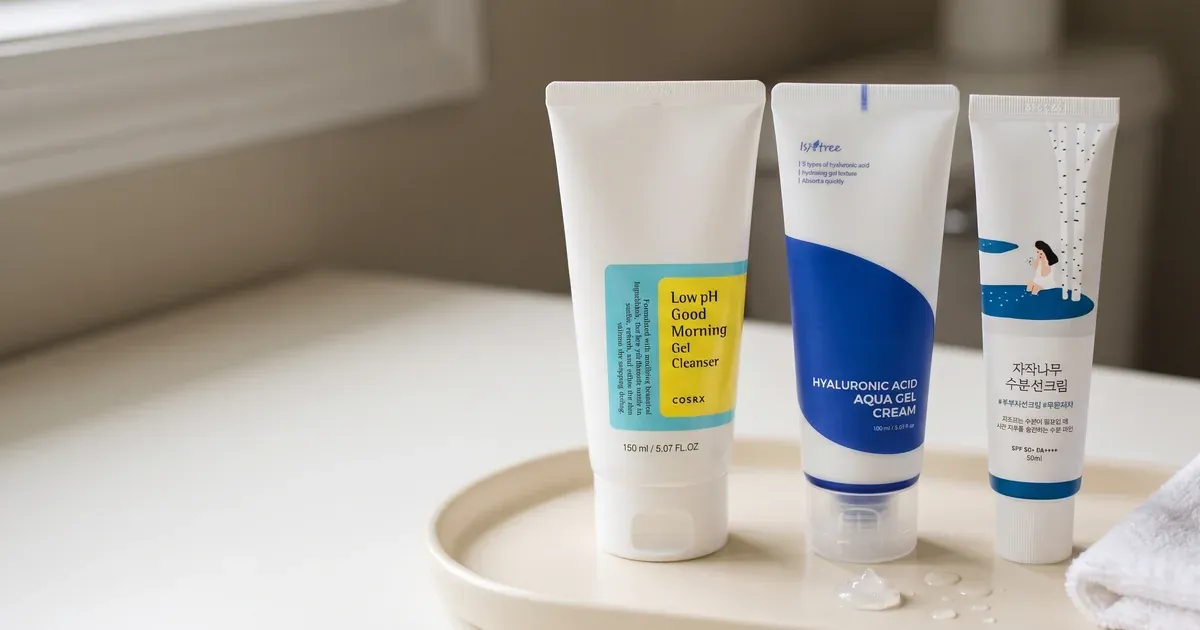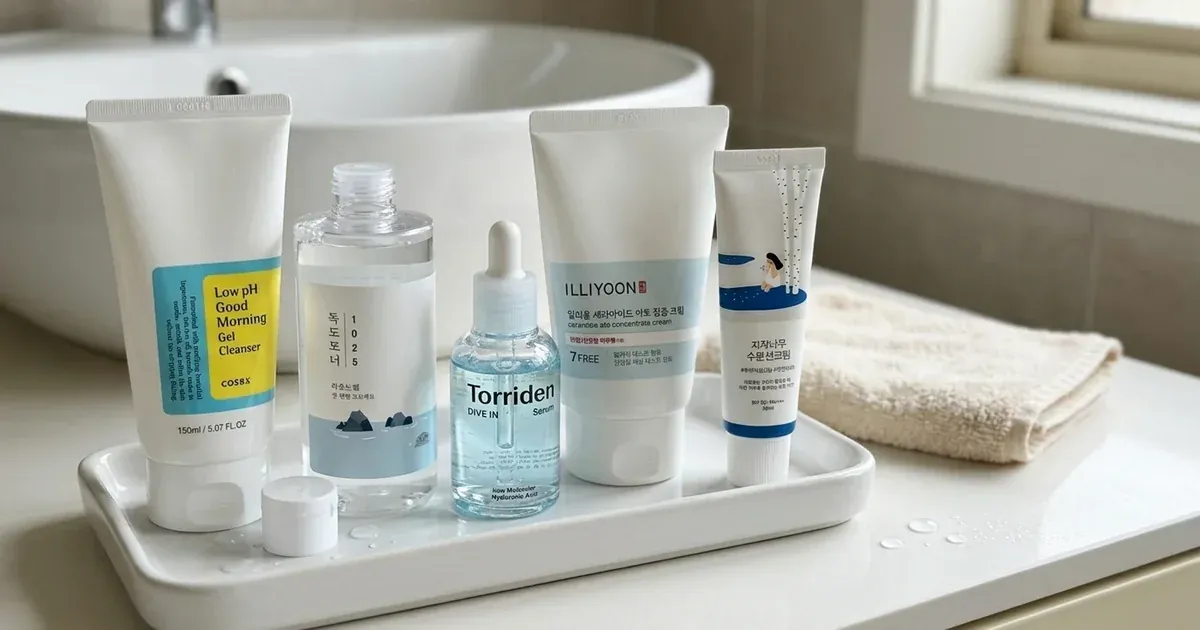
It usually starts with enthusiasm. A new toner, then a vitamin C serum, then an acid, then a second serum because everyone online loves it. A few weeks later, everything stings when it goes on, your cheeks look red, and there are dry flakes around your nose that no amount of moisturizer seems to fix.
If that sounds familiar, your skin barrier may be struggling. Below: what the barrier actually is, the signs it’s having a hard time, the habits that usually cause it, a pared-back routine, how long to give it, how to add products back, and when it’s time to see a dermatologist.
This guide is put together from Cleveland Clinic, the dermatologists at the AAD and one published study, with each point linked to its source. We haven’t tried a reset routine on our own skin for this piece (how we review).
What is the skin barrier?
You will see “barrier” on almost every Korean label now, so it helps to know what it actually refers to. Your skin has an outer layer that holds water in and keeps irritants out. When that layer is working well, products sting less and your skin stays comfortable longer. Products in this category are designed to support that layer, not to repair or treat anything.
Dermatologist Melissa Piliang puts it simply for Cleveland Clinic: your skin barrier is basically the outer layer of your skin, and it works to keep water in and to keep chemicals and infectious bacteria out. Part of what holds it together are lipids, like ceramides, cholesterol and fatty acids. Keep those three in mind, because they come back when we get to moisturizer.
Signs your skin barrier is struggling
Cleveland Clinic lists these signs that the barrier isn’t doing its job:
- Acne.
- Dry, scaly or flaky skin.
- Infection.
- Inflammation and irritation.
- Itchiness.
- Rough patches.
- Stinging, especially when you apply skin care products.
- Tenderness or sensitivity.
The one most people notice first is the stinging. If a toner or serum that used to feel like nothing now burns on the way in, that is your cue to slow down. This list is a guide to what to watch for, not a diagnosis; plenty of these can have other causes.
What usually knocks it off balance
According to Cleveland Clinic, the usual culprits are using harsh chemicals or soaps, over-exfoliating or scrubbing your skin, and not using a moisturizer.
There’s one more that matters if you have been building a K-beauty routine quickly. The AAD says using too many products may irritate the skin, especially if you are using more than one anti-aging product. Several actives stacked morning and night is exactly the kind of routine that can tip skin over.
The pared-back routine
The AAD describes a simple approach in three steps: cleansing, moisturizing and protecting your skin. For a barrier that’s struggling, that is the whole routine for now.
Cleanse gently. Cleveland Clinic suggests lukewarm water, not hot, because hot water washes away your skin’s natural oils. Look for a soap-free cleanser made for sensitive skin and free of fragrance. Massage it on and rinse it off; scrubbing away for longer doesn’t help.
Moisturize with the right building blocks. Choose a moisturizer that includes ceramides, fatty acids and lipids, the same things that naturally make up a large part of the skin barrier (Cleveland Clinic).
Protect every day. The advice on sunscreen is refreshingly practical: find one you like, will actually use and can afford, then use it every day (Cleveland Clinic).
Pause the strong stuff. If you’re using acne treatments, Cleveland Clinic suggests backing down on them for a bit so you can focus on gentle care and let your skin heal. Your exfoliating acids and extra serums can wait on the shelf too.
Once things settle, a soothing ingredient can be a sensible first addition; our cica guide covers what the research on centella does and doesn’t show.
How long before things calm down?
Longer than most of us would like. According to Cleveland Clinic, it typically takes three or four months to start seeing the benefits of your efforts.
That is a point where things begin to improve, not a promise that every sign will be gone by then. It’s also the reason to resist swapping products every week: a routine you keep changing never gets the time it needs.
Adding products back, one at a time
When you’re ready to bring something back, do it one product at a time, and patch test it first. The AAD suggests this:
- Choose a quarter-sized spot where the product won’t be rubbed or washed away, such as the underside of your arm or the bend of your elbow.
- Apply the product there twice daily for seven to 10 days.
- If you don’t get a reaction, such as red, itchy or swollen skin, go ahead and use it.
- If your skin does react, gently wash the product off as soon as possible and don’t use it again.
If you’re wondering which ingredient to reintroduce first, niacinamide has some research behind it. In one study, applying niacinamide increased ceramide and free fatty acid levels in the outer layer of skin and decreased water loss through the skin in dry skin. That’s an encouraging finding, not a guarantee for your face. If you want to see what a niacinamide serum looks like in practice, our niacinamide serum review goes through one.
When to see a dermatologist
A pared-back routine is a reasonable first step for skin that’s been overdone. It is not a fix for a skin condition. If your barrier problems come from a condition you already have, Cleveland Clinic says you should work with a dermatologist to make sure you’re doing what’s right for your specific needs.
The same goes if your skin is reacting badly enough that you’re looking for treatment. That is a conversation for a doctor, not a toner.
FAQ
How do I know my skin barrier is damaged? Cleveland Clinic lists the signs as acne, dry, scaly or flaky skin, infection, inflammation and irritation, itchiness, rough patches, stinging, especially when you apply skin care products, and tenderness or sensitivity.
What damages the skin barrier? Cleveland Clinic names harsh chemicals or soaps, over-exfoliating or scrubbing your skin, and not using a moisturizer. The AAD adds that using too many products may irritate the skin, especially more than one anti-aging product.
What should a skin barrier reset routine include? Keep it to the AAD’s three steps: cleanse, moisturize, protect. Cleveland Clinic suggests lukewarm water rather than hot, a soap-free, fragrance-free cleanser for sensitive skin, a moisturizer with ceramides, fatty acids and lipids, and a sunscreen you will use every day.
How long does it take for the skin barrier to recover? Cleveland Clinic says it typically takes three or four months to start seeing the benefits of your efforts, so give a pared-back routine time before judging it.
How do I add products back without setting my skin off again? One at a time. The AAD suggests applying a new product to a quarter-sized spot, such as the bend of your elbow, twice daily for seven to 10 days. If there is no redness, itching or swelling, go ahead and use it; if your skin reacts, wash it off gently and don’t use it again.
The bottom line
When your skin barrier is struggling, the fix is mostly subtraction. Strip the routine back to cleanse, moisturize and protect, keep the water lukewarm and the cleanser gentle, give your skin real time, and only then bring products back one by one with a patch test. None of this is a treatment, and if your skin doesn’t settle, a dermatologist is the right next stop.