If you’ve read our comparison with a calming toner and landed on Round Lab, this is the next question: what exactly are you buying? The 1025 Dokdo Toner comes up again and again in Reddit skincare threads, and it’s often described as an exfoliating toner. That label makes some people nervous and others expect too much, so it’s worth looking at what’s in the bottle.
Below: what Round Lab says the toner does, what’s actually on its ingredient list, and what the evidence behind it really adds up to, with each point checked against its source (how we review).
This review contains paid links: The Dew Journal earns a commission on purchases, at no cost to you. It doesn’t affect ratings.
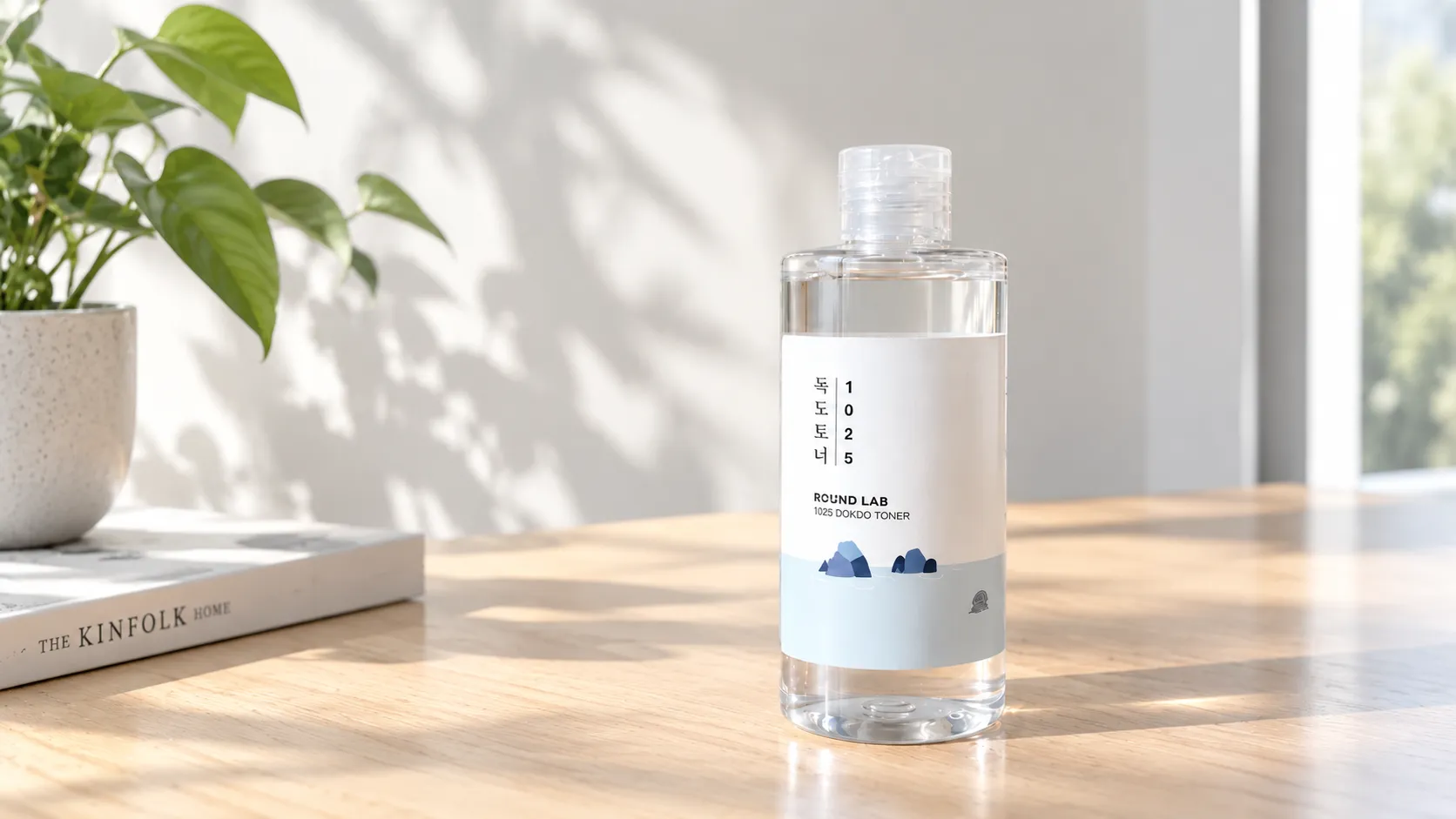
Is the Round Lab Dokdo Toner worth buying?
DewRating: 4.0
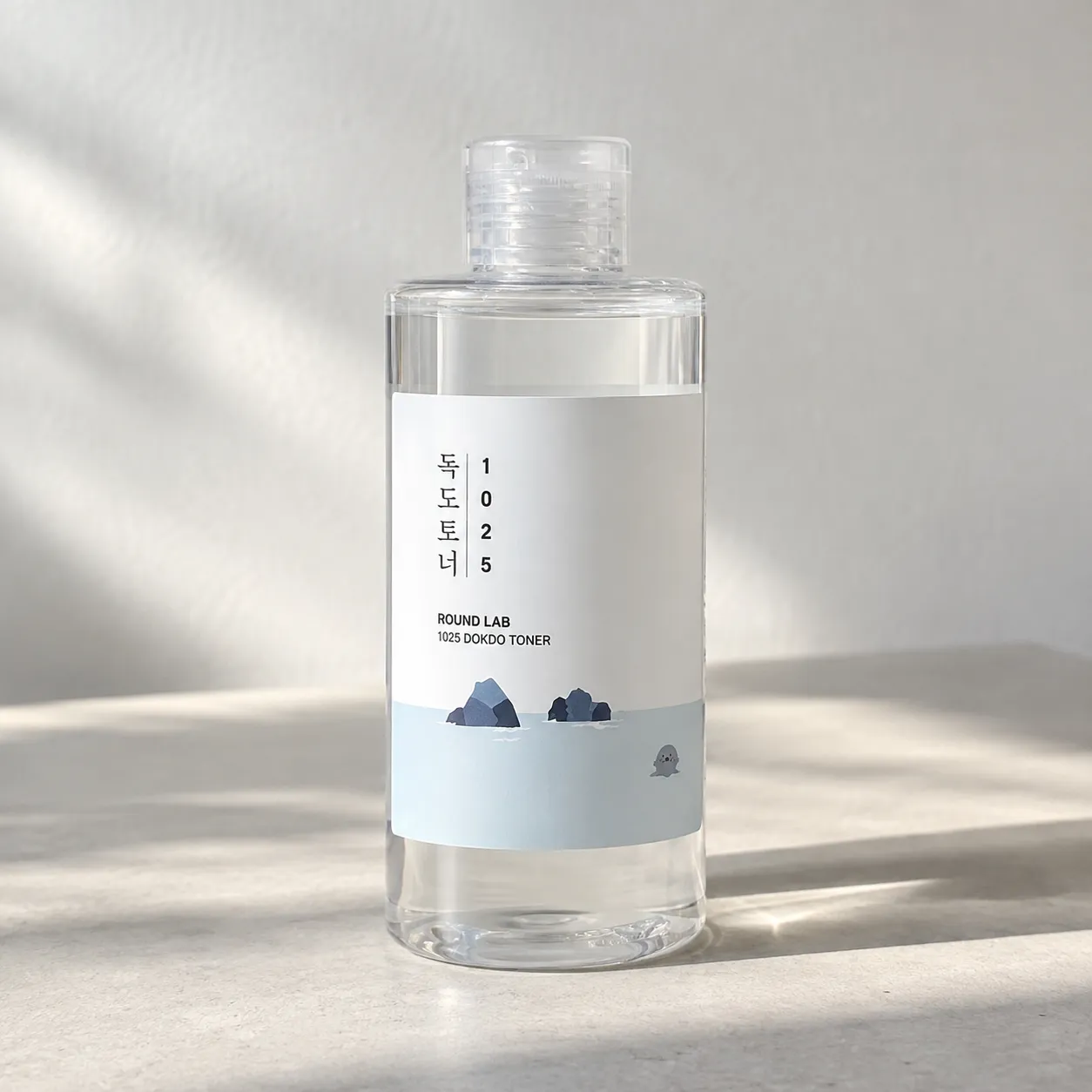
The Dokdo Toner is a watery, wipe-on toner that Round Lab says removes dead skin cells while it hydrates. The exfoliating ingredient is an enzyme rather than an acid, which makes it a gentle smoothing step rather than a peel. It won’t transform your skin, but it’s cheap to try and easy to fit into a routine.
Best for: Oily, combination or rough-textured skin that wants a light smoothing step after cleansing, without adding an acid toner. Skip if: Your skin is already over-exfoliated or reacts to exfoliating products. It is still an exfoliant, however mild.
What does the Dokdo Toner claim to do?
Round Lab’s pitch covers two jobs at once. The brand says the toner removes dead skin cells while filling skin with moisture, smoothing out rough texture as it goes. It also credits a patented technology, Hatching EX-07, with controlling excess sebum and exfoliating old skin cells. In short: hydration plus a mild smoothing step, aimed at skin that runs oily.
The “Dokdo” in the name points to the other headline ingredient: deep-sea water, which Round Lab says is drawn from 5,000 feet below the East Sea. According to the brand, it carries 72 types of nature-derived minerals, including magnesium, calcium and zinc, and helps keep skin’s moisture balance.
Round Lab lists it as good for sensitive skin and all skin types. That’s the brand’s own positioning, and the section on who should skip it below is worth reading next to it.
If you want to know how enzymes and mineral waters fit next to other toner ingredients, our K-beauty ingredients guide covers the basics.
The basics: 50ml, 100ml, 200ml or 500ml · $6.00 to $34.00 at Round Lab’s own store, in USD, (list prices, checked November 2026) · texture: watery toner, wiped on with a cotton pad
How strong is the exfoliation?
This is the question most people have before buying, so here’s what the ingredient list Round Lab publishes shows.
The exfoliating ingredient is protease, an enzyme used in skincare to help loosen dead skin cells. A 2022 review in the Journal of Cosmetic Dermatology describes protein-digesting enzymes like this as able to mimic the skin’s own shedding process, but it found only 11 studies on enzyme exfoliation and few clinical trials, and it calls for more robust testing (Trevisol et al., 2022). There’s no AHA, BHA or PHA on the list, and no fragrance. Around it sit the ingredients you’d expect in a hydrating toner: glycerin, betaine, panthenol and allantoin, along with sea water, sugarcane extract and a red seaweed extract (chondrus crispus). On paper, that makes it a mild exfoliant: closer to a smoothing toner than to an acid treatment.
Round Lab says four clinical tests back the toner, including 31.79 percent fewer dead skin cells. That figure comes from the brand’s own testing, and the product page doesn’t give a sample size or method, so treat it as a claim rather than a result you should expect.
How often should you use it? Round Lab’s directions explain how to apply it but don’t say how often, so we won’t make up a rule. The sensible limit is the same as for any exfoliating product: don’t stack it on the same night as an acid toner, a peel or a retinoid you’re still getting used to, and back off if your skin starts to sting or feel tight.
Texture and scent
Round Lab describes the texture as watery and the scent as unscented, which matches the ingredient list: nothing in it is there for fragrance.
If you want a toner that leaves a cushioned, dewy layer behind, this isn’t that. It’s a thin liquid made for a cotton pad.
How do you use the Dokdo Toner?
Round Lab’s directions are simple: after cleansing, soak a cotton pad well with the toner and gently wipe it along the skin texture to smooth it out.
After that, carry on with the rest of your routine: serum, then moisturizer, then sunscreen in the morning. Because the wipe is the exfoliating step, you don’t need a second exfoliating toner alongside it. If you’re building a routine from scratch, our beginner routine guide covers the order.
What do users actually report?
Less than you might expect, once you look for evidence rather than enthusiasm. GlowRecs, a site that tracks Reddit skincare discussions, rates the toner “Mixed”. It says most of the accounts it keeps mention the Dokdo Toner inside multi-product routines, and that these accounts are routine context, not a verified approval rate.
The clearest example it keeps is a user who saw a big difference on their hands after three months of the toner plus a barrier cream, which doesn’t tell you which product did the work. So we won’t quote a percentage of happy buyers: there isn’t a reliable one.
What that leaves you with is the ingredient list and the brand’s own claims, covered above. For a mild enzyme toner at $6.00 for a 50ml bottle, that’s enough to justify a trial, not enough to promise results.
A note on expectations: results vary from person to person, and no toner cures acne or treats a skin condition.
Who should use it, and who should skip it?
It suits oily, combination or rough-textured skin that wants a light smoothing step and a hydrating layer in one. Round Lab lists it as good for sensitive skin and all skin types; that’s the brand’s claim, not something we can confirm.
Consider skipping it if your skin is already over-exfoliated, or you’ve had trouble with exfoliating products before: the enzyme is mild, but it is there to loosen dead skin cells, and the 2022 review notes that irritation is one of the things enzyme products still need to be tested for. Whatever your skin type, patch test first and introduce it on its own, so you can tell whether it’s the toner your skin is reacting to.
Pros and cons
Pros
- Watery, non-sticky and unscented, with no fragrance on the ingredient list
- Exfoliates with an enzyme (protease) instead of AHA, BHA or PHA
- Cheap to try: a 50ml bottle is $6.00 at Round Lab’s own store
Cons
- The headline result, 31.79 percent fewer dead skin cells, comes from Round Lab’s own testing, with no sample size or method on the product page
- No reliable user verdict: the Reddit accounts GlowRecs keeps mostly mention it inside full routines
- You need cotton pads, which adds a small ongoing cost and some waste
DewRating breakdown
Scores: Formula & feel 4.0/5 · Results reported 3.5/5 · Value for money 4.5/5 · Worth buying 4.0/5 · Overall 4.0/5
Value for money pulls the score up: the small bottles make it an easy, low-risk first toner. Results reported pull it down, because the brand’s figures don’t come with a method and there is no reliable user verdict to set against them.
Where to buy it
At Round Lab’s own store, prices in USD (list prices, checked November 2026):
- 50ml for $6.00 (sold out when we checked)
- 100ml for $10.00
- 200ml for $17.00
- 500ml for $34.00
A small bottle is the sensible way to find out whether your skin likes it before committing to the big one. Prices move between retailers and sale weeks, so compare before checkout:
Paid links: The Dew Journal earns a commission on purchases, at no cost to you.
- Check the current price
- Or buy direct from Round Lab’s own store
FAQ
What does Round Lab 1025 Dokdo Toner do? Round Lab says it removes dead skin cells while it hydrates, smoothing out rough texture, and that its patented Hatching EX-07 technology is meant to control excess sebum. It is built on deep-sea water drawn from 5,000 feet below the East Sea, which the brand says carries 72 types of minerals. It is a toner, not a treatment for acne or any skin condition.
Is Round Lab Dokdo Toner an exfoliating toner? Can you use it every day? Yes, but a mild kind. The exfoliating ingredient on the full list Round Lab publishes is an enzyme, protease; there is no AHA, BHA or PHA on it, and no fragrance. Round Lab’s directions say how to apply it but not how often, so we won’t invent a rule. If you already use an acid toner or a peel, don’t stack them on the same night, and add it slowly if your skin reacts easily.
How do you use Round Lab Dokdo Toner? After cleansing, soak a cotton pad with the toner and gently wipe it along the skin texture. Follow with your serum and moisturizer as usual.
What do people say after using it for a while? There is no reliable approval rate to quote. GlowRecs, which tracks Reddit skincare discussions, rates the toner “Mixed” and says the accounts it keeps mostly mention it inside multi-product routines, so they can’t show what the toner does on its own. Because it contains an exfoliating enzyme, patch test first if your skin reacts easily.
Which size should you buy, and how much does it cost? At Round Lab’s own store, prices in USD, it comes in 50ml for $6.00, 100ml for $10.00, 200ml for $17.00 and 500ml for $34.00 (list prices, checked November 2026). A small bottle is the cheap way to find out whether your skin likes it before committing to the big one.
Final thoughts
The Dokdo Toner earns its place as a go-to first toner, but for modest reasons: it’s watery, unscented, gentle by design and cheap to try, and it adds a light smoothing step without bringing an acid into your routine. It isn’t a skin-changer, and the brand’s headline numbers are best read as claims. For oily, combination or rough-textured skin, it’s an easy recommendation; if your skin is already reactive to exfoliation, I’d look elsewhere.
Still deciding between this and a calming toner? Our side-by-side comparison lays out which one fits which job.